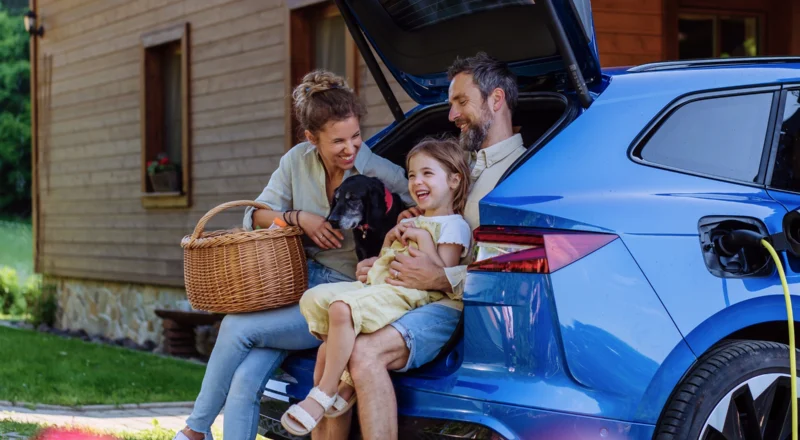
Family EV Cars With Child Safety: Electric Vehicles (EVs) are no longer niche products aimed only at tech enthusiasts. They are fast becoming the first choice for families, especially parents looking for safer, cleaner, and smarter cars for daily use. One of the biggest reasons behind this shift is that modern EVs are designed on new platforms, allowing manufacturers to integrate advanced child safety features from the ground up.
For families with infants, toddlers, or school-going children, safety is not limited to crash protection alone. It includes child seat compatibility, interior design, low-speed safety systems, air quality, cabin comfort, and intelligent alerts that prevent everyday accidents. This pillar article explores everything parents need to know before choosing a family-friendly electric car.
Why Family Buyers Are Choosing EVs
Family car requirements are very different from individual or performance-focused buyers. EVs naturally align with these needs.
Key Family-Friendly Advantages of EVs
- Quiet cabins reduce stress and help children sleep
- Smooth acceleration avoids sudden jerks
- Flat floors improve rear-seat comfort and child seat installation
- Lower running costs free up family budgets
- Modern safety tech is often standard, not optional
Unlike older ICE vehicles, many EVs are designed with safety-first architecture, making them ideal for households with children.
What Makes an EV Truly Child-Safe?
A family EV must go beyond basic airbags and seatbelts. Below are the core child safety elements parents should prioritize.
1. Child Seat Compatibility (ISOFIX / LATCH)
This is the foundation of child safety.
What Parents Should Look For:
- ISOFIX/LATCH anchors on rear seats
- Clearly marked anchor points
- Top-tether anchors for forward-facing seats
- Adequate spacing between seats
A well-designed EV allows child seats to be installed securely and quickly, reducing installation errors—one of the leading causes of child injuries in cars.
Read Also: EV Companies Target Corporate Buyers to Boost Sales Before Fiscal Year-End in India
2. Rear Seat Space & Layout
EVs benefit from skateboard-style platforms, which often result in:
- Flat rear floors
- More legroom
- Better seat geometry
Why This Matters for Families:
- Rear-facing seats need space
- Front seats should remain usable
- Children grow fast—space ensures long-term usability
A cramped rear seat can turn daily school runs into a struggle.
3. Child Locks & Window Safety
Modern EVs often use electronic child locks, which are safer and more convenient than manual systems.
Must-Have Features:
- Rear door child lock
- Rear window lock
- Pinch-protection windows
- Central driver control for all locks
These features prevent accidental door opening and window injuries.
4. Rear Occupant / Child Presence Detection
One of the most important recent safety innovations.
How It Works:
- Detects movement or seat occupancy
- Alerts the driver if a child is left behind
- Uses sensors, software logic, or cameras
This feature is especially critical in hot climates, where cabin temperatures can rise dangerously within minutes.
5. Advanced Driver Assistance Systems (ADAS) for Family Safety
EVs usually come with strong ADAS packages, which are extremely valuable for families.
Key ADAS Features for Parents:
- Automatic Emergency Braking (AEB)
- Pedestrian and cyclist detection
- Low-speed collision avoidance
- Lane-keeping assistance
- Rear cross-traffic alert
These systems help prevent accidents during:
- School drop-offs
- Parking lot driving
- Residential street driving
6. Low-Speed Safety: Where Children Are Most at Risk
Most child-related car accidents happen at low speeds, not highways.
EVs excel here because:
- Regenerative braking improves control
- Cameras and sensors work better at low speed
- Silent operation reduces mechanical complexity
Parents should ensure the EV’s AEB works below 30 km/h, where most parking and neighborhood incidents occur.
7. Airbags & Airbag Deactivation
Airbag safety is critical when traveling with children.
Family-Safe Airbag Design Includes:
- Multiple airbags (front, side, curtain)
- Passenger airbag deactivation option
- Clear airbag status indicators
Rear seats should have full-length curtain airbags to protect children in side impacts.
8. Cabin Air Quality & Climate Control
Children are more sensitive to air pollution and temperature changes.
EV Cabin Benefits:
- Advanced cabin air filters
- Sealed battery systems (no exhaust fumes)
- Rear AC vents
- Faster cabin cooling or heating
Some EVs allow pre-conditioning, meaning the cabin can be cooled or heated before children enter the vehicle.
9. Structural Safety & Battery Protection
Battery safety is often misunderstood.
Why Modern EVs Are Structurally Safe:
- Battery packs are enclosed in reinforced frames
- Crash structures are designed to protect the battery
- Multiple thermal protection layers exist
For families, this means lower fire risk and better crash energy absorption when compared to older vehicle designs.
10. Visibility & Parking Assistance
Children are often hard to spot around vehicles.
Family-Focused Visibility Features:
- 360-degree camera systems
- Rear and front parking sensors
- Clear rear camera resolution
- Blind-spot monitoring
These features reduce the risk of accidents during reversing and tight parking.
Daily Family Use: Practical Safety Features
Safety is also about convenience and daily usability.
Family-Friendly Practical Features:
- Wide-opening rear doors
- Low step-in height
- Easy-to-clean interiors
- Large storage spaces for strollers and bags
- Quiet ride for sleeping children
These features reduce stress and distraction, indirectly improving safety.
Evaluating a Family EV: Test Drive Checklist
Before purchasing, parents should do more than a standard test drive.
What to Test:
- Install your child seat at the dealership
- Check door opening angles
- Test child lock functionality
- Sit in the rear seat yourself
- Test alerts and warnings
- Observe cabin noise and comfort
A vehicle that looks good on paper may fail in real-world family use.
Common Myths About EVs and Child Safety
Myth 1: EVs are dangerous because of batteries
Reality: EV battery incidents are rare, and modern designs are highly protected.
Myth 2: Child seats don’t fit well in EVs
Reality: Flat floors and wide cabins often make EVs better for child seats.
Myth 3: EVs are too quiet and unsafe
Reality: Pedestrian alert sounds and ADAS compensate for low noise levels.
Long-Term Ownership Safety Tips for Families
- Always update vehicle software
- Avoid using uncertified chargers
- Inspect the car after minor accidents
- Teach children basic EV safety rules
- Keep loose items secured in the cabin
Safe ownership habits matter just as much as safety features.
Read Also: Electric Vehicles Explained: The Complete Beginner-to-Expert Guide (2026)
Final Thoughts
Choosing a family EV is a responsibility, not just a purchase. The right electric car should protect your children in crashes, prevent everyday accidents, support healthy cabin conditions, and adapt as your family grows.
Modern EVs are uniquely positioned to meet these needs—but only if parents know what to look for. By focusing on child-centric safety features, thoughtful design, and real-world usability, families can enjoy the benefits of electric mobility without compromising on safety.
[…] not all EVs are equally family-friendly. This guide focuses on vehicles that truly meet the needs of parents with small […]
[…] Read Also: Family EV Cars With Child Safety Features 2 […]
[…] Read Also: Family EV Cars With Child Safety Features 2 […]
[…] Read Also: Family EV Cars With Child Safety Features 2 […]