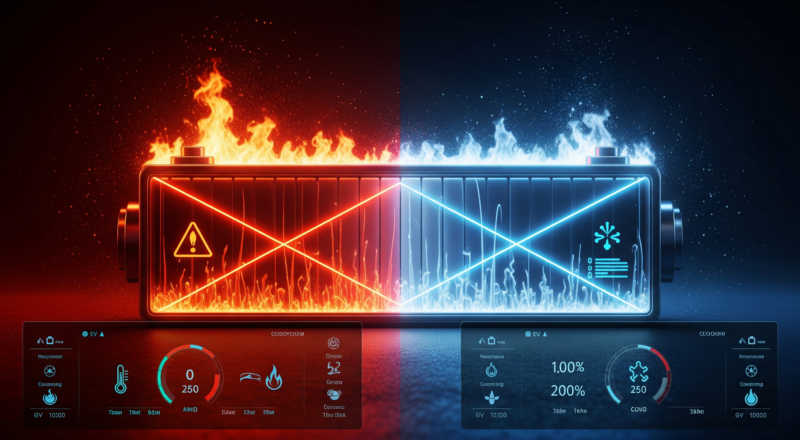
Learn how EV battery temperature control systems manage heat and cold to improve safety, charging speed, range, and battery lifespan.
Introduction
The battery is the heart of an electric vehicle (EV). While range, charging speed, and battery capacity often dominate discussions, battery temperature control systems are just as critical—yet far less understood. Without proper temperature management, even the most advanced battery can suffer from reduced performance, faster degradation, safety risks, and in extreme cases, fire.
Modern EVs operate in diverse climates—from extreme summer heat to freezing winters. To perform reliably in all conditions, they rely on battery thermal management systems (BTMS) that keep the battery within an optimal temperature window. This article explains how EV battery temperature control systems work, why they matter, the different technologies used, and what this means for everyday EV owners.
🌡️ Why Battery Temperature Control Is Critical in EVs
Lithium-ion batteries are sensitive to temperature. They perform best within a narrow operating range, typically between 20°C and 40°C.
Problems Caused by Poor Temperature Control
- Overheating
- Accelerated battery degradation
- Reduced charging speed
- Increased fire risk due to thermal runaway
- Excessive Cold
- Reduced driving range
- Slower charging
- Temporary loss of power output
Battery temperature control systems exist to prevent these extremes, ensuring safety, performance, and long battery life.
🔬 What Is an EV Battery Temperature Control System?
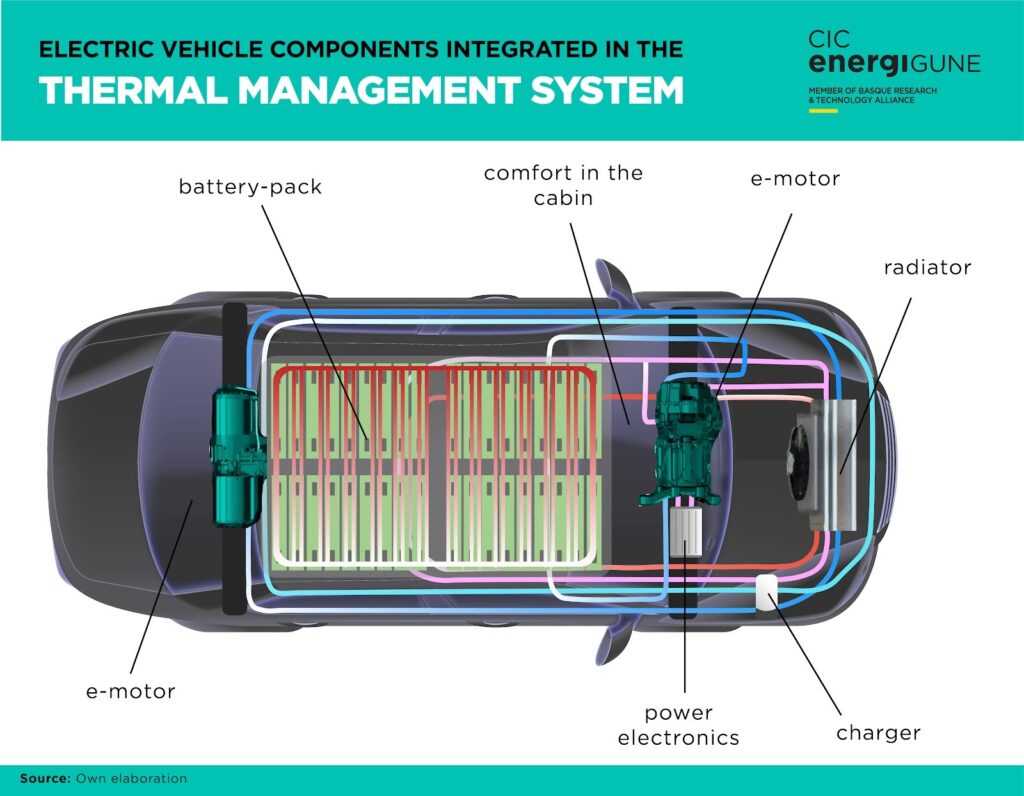
An EV battery temperature control system, also known as a Battery Thermal Management System (BTMS), is a combination of:
- Sensors
- Cooling and heating components
- Control software
Its job is to:
- Monitor battery temperature in real time
- Cool the battery when it gets too hot
- Heat the battery when it gets too cold
- Maintain uniform temperature across all cells
Uniform temperature is just as important as the absolute temperature—because uneven heating can damage individual battery cells.
🔁 How EV Battery Thermal Management Works
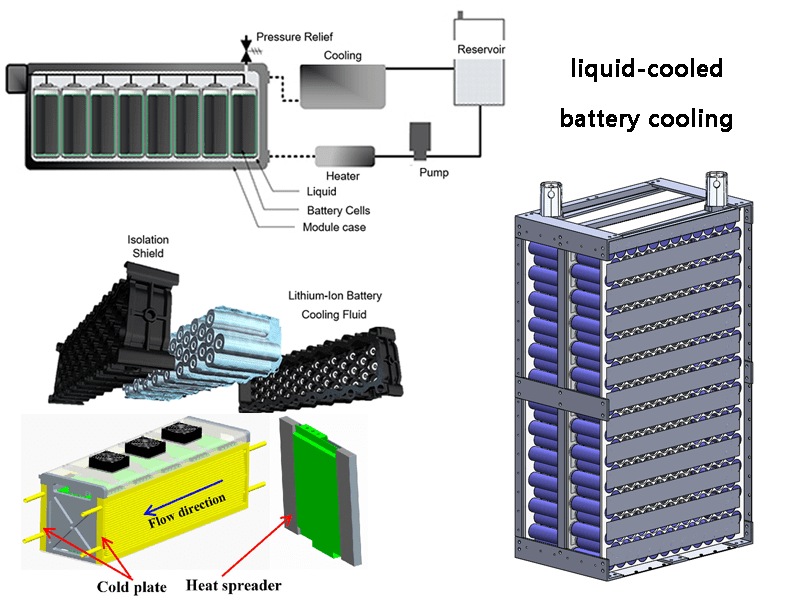
Step-by-Step Process
- Temperature Monitoring
Sensors embedded throughout the battery pack continuously measure cell temperatures. - Data Analysis by Battery Management System (BMS)
The BMS analyzes temperature data along with voltage, current, and state of charge. - Activation of Cooling or Heating
Based on conditions, the system activates cooling or heating mechanisms. - Continuous Regulation
Temperature is adjusted dynamically during driving, charging, and even when the vehicle is parked.
❄️ Battery Cooling Systems in Electric Vehicles
Cooling is essential during:
- Fast charging
- High-speed driving
- Hot weather
- Heavy load conditions
1. Air-Cooled Battery Systems
How it works:
Air is circulated around the battery pack using fans.
Advantages
- Simple design
- Lower cost
- Lightweight
Limitations
- Less effective in extreme heat
- Uneven cooling across cells
Air-cooled systems are mostly found in older or entry-level EVs.
2. Liquid-Cooled Battery Systems
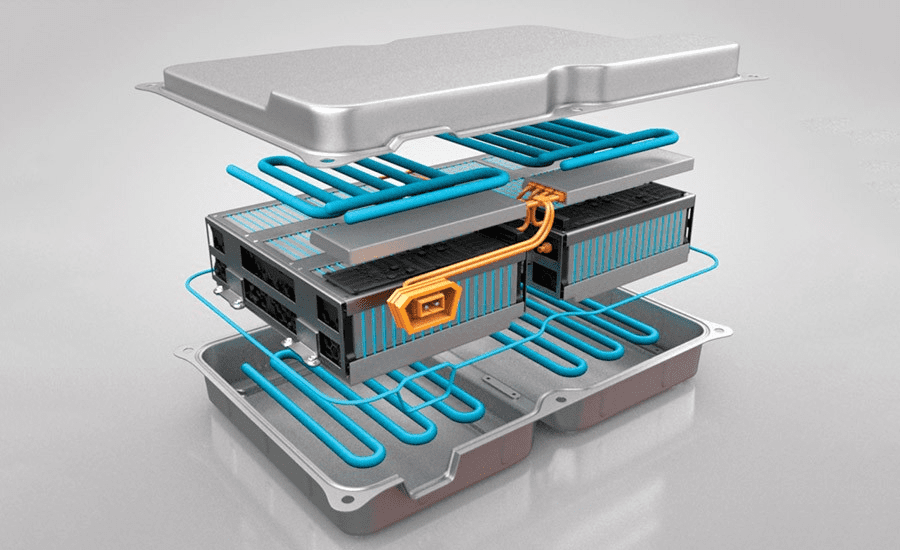
How it works:
A liquid coolant (usually a water-glycol mixture) flows through channels around battery cells.
Advantages
- Highly effective heat removal
- Uniform temperature control
- Better safety during fast charging
Limitations
- More complex
- Slightly higher cost
Most modern EVs use liquid cooling because it offers the best balance of performance and safety.
3. Refrigerant-Based Cooling (Direct Cooling)
How it works:
The vehicle’s air-conditioning refrigerant is used directly to cool the battery.
Advantages
- Very fast cooling
- Excellent performance in hot climates
Limitations
- Complex system integration
- Higher repair cost
This method is used in some advanced EV architectures for high efficiency.
🔥 Battery Heating Systems: Why Cold Is Also a Problem
Cold temperatures slow down chemical reactions inside lithium-ion batteries. This leads to:
- Reduced range
- Sluggish acceleration
- Slower charging
Common Battery Heating Methods
1. Electric Resistance Heaters
- Simple and reliable
- Consume battery energy
2. Heat Pumps
- More energy-efficient
- Can share heat between cabin and battery
3. Waste Heat Recovery
- Uses heat generated by motors and power electronics
- Improves overall efficiency
Heating systems are especially important in cold climates and during winter fast charging.
Read Also: Best EVs Under ₹15 Lakh in India (2026 Buyer Guide)
⚠️ Thermal Runaway and Safety Protection
One of the most serious battery risks is thermal runaway—a chain reaction where overheating causes cells to ignite uncontrollably.
How Temperature Control Prevents Thermal Runaway
- Maintains safe operating temperature
- Detects abnormal heat spikes early
- Isolates affected cells
- Reduces charging power automatically
Advanced BTMS designs can stop thermal runaway before it spreads, significantly improving EV safety.
🔌 Temperature Control During EV Charging
Fast charging generates significant heat. Without proper cooling:
- Charging speed is reduced
- Battery life is shortened
- Safety risks increase
What Happens During Fast Charging
- Battery temperature rises rapidly
- Cooling system activates aggressively
- Charging speed may slow if limits are reached
This is why EVs charge fastest when the battery is pre-conditioned to the right temperature.
🌍 Climate Impact on Battery Thermal Management
Hot Climate Challenges
- Continuous cooling demand
- Higher energy consumption
- Need for robust liquid cooling
Cold Climate Challenges
- Reduced range
- Battery must be heated before charging
- Increased reliance on heat pumps
Manufacturers design temperature control systems based on target markets and climate conditions.
📉 Impact on Battery Life & Degradation
Battery degradation is strongly linked to temperature.
High Temperatures Cause:
- Faster chemical breakdown
- Capacity loss
- Reduced usable range
Controlled Temperatures Result In:
- Longer battery lifespan
- More consistent performance
- Better resale value
Well-managed batteries can retain 70–80% capacity even after 8–10 years.
🧠 Software’s Role in Battery Temperature Control
Hardware alone is not enough. Modern EVs rely heavily on software algorithms.
Software Functions Include:
- Predictive cooling before fast charging
- Pre-conditioning based on navigation routes
- Adaptive control based on driving behavior
- Over-the-air updates improving efficiency
Software intelligence is a major reason newer EVs outperform older ones with similar battery sizes.
🚗 What EV Owners Should Know (Practical Tips)
✔ Use Scheduled Charging
Charging during cooler hours reduces heat stress.
✔ Pre-Condition Before Fast Charging
Use navigation-linked charging where available.
✔ Avoid Extreme Heat Parking
Shade and covered parking reduce thermal load.
✔ Keep Software Updated
Updates often improve thermal management logic.
✔ Don’t Ignore Warnings
Temperature alerts are designed to protect your battery.
🔮 Future of EV Battery Temperature Control Systems
Battery thermal management is evolving rapidly.
Emerging Innovations
- Solid-state batteries with wider temperature tolerance
- Immersion cooling, where cells are submerged in dielectric fluids
- AI-driven thermal optimization
- Lighter and more compact cooling systems
These innovations will further improve safety, charging speed, and battery longevity.
Read Also:Best Family EV Cars for Parents With Small Children (2026 Guide)
🧾 Final Thoughts
Electric vehicle battery temperature control systems are silent guardians—working in the background to ensure your EV remains safe, efficient, and durable. While drivers may never see these systems in action, they directly influence range consistency, charging performance, fire safety, and long-term ownership cost.
As EV technology matures, battery thermal management will become even smarter and more efficient. For buyers and owners, understanding this system helps build confidence in electric mobility and encourages better usage habits that protect the most expensive component of an EV—the battery.
[…] Read Also: How EV Battery Temperature Control Systems Prevent Fires & Improve Range […]