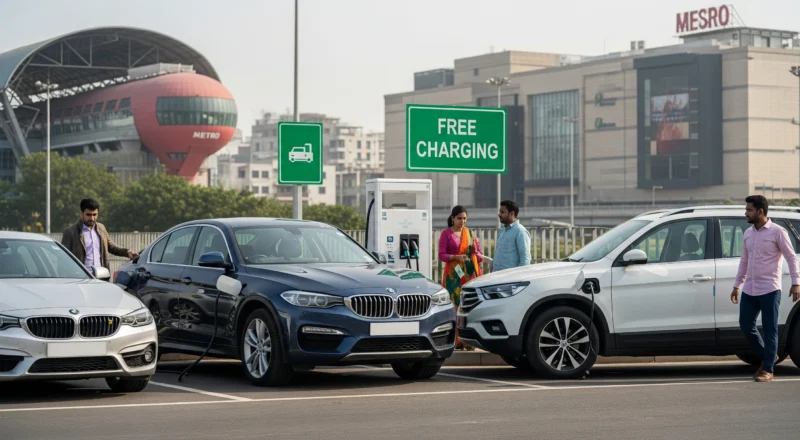
Find free EV charging stations in India, including malls, offices, metro stations, and hotels. Learn limits, access rules, and real usage tips.
Introduction
As electric vehicle (EV) adoption grows across India, one question is searched more than almost any other:
“Are there free EV charging stations in India?”
The short answer is yes—but with conditions.
This EEAT-compliant guide (Experience, Expertise, Authoritativeness, Trustworthiness) explains where free EV charging is available in India, who offers it, how it really works, hidden limitations, and whether it’s reliable for daily use. The goal is not hype, but real-world clarity for EV owners and buyers.
What Does “Free EV Charging” Really Mean in India?
Before listing locations, it’s important to understand the term “free” in context.
In India, free EV charging usually means:
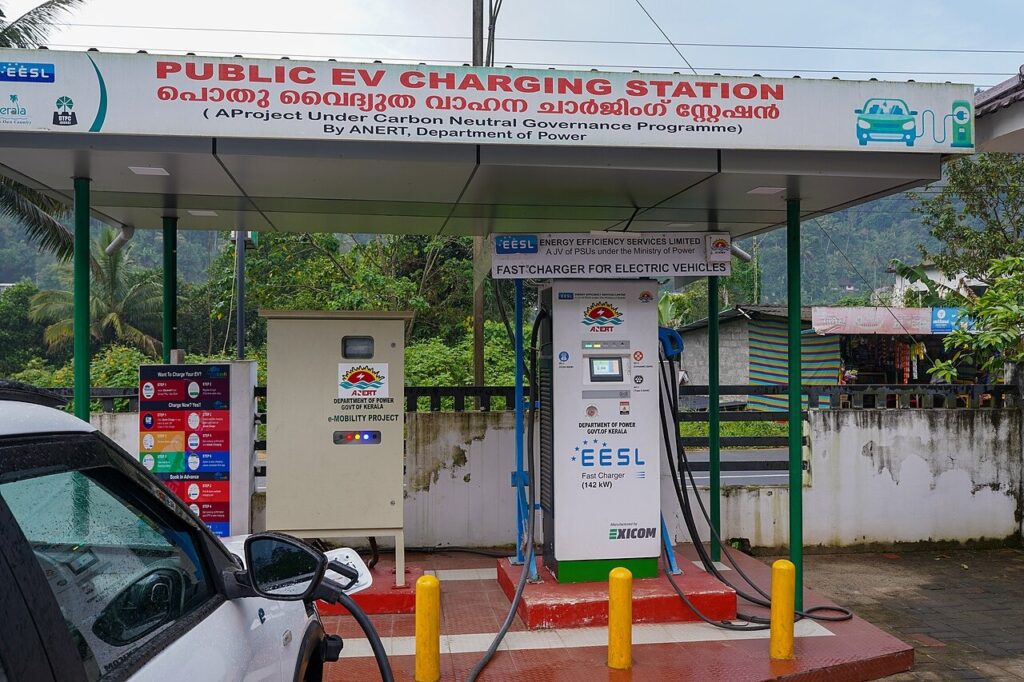
- Charging cost is included indirectly (parking, shopping, office access)
- Promotional or pilot-phase charging
- Limited-time or limited-speed charging
- Offered as an amenity, not a public utility
👉 Truly unlimited, 24×7 free charging for everyone is rare.
Why Free EV Charging Exists in India
Free EV charging is mainly driven by:
- Government EV adoption goals
- Corporate sustainability initiatives
- Real estate & retail footfall strategies
- Early-stage EV ecosystem incentives
These stations help normalize EV use and reduce “range anxiety” for new users.
Main Places Where Free EV Charging Is Available in India
1️⃣ Shopping Malls & Commercial Complexes
Many malls offer free or complimentary EV charging to attract premium customers.
How It Works
- Charging is usually slow AC (3.3–7.2 kW)
- Often free with:
- Paid parking
- Shopping bills
- Time limits may apply (2–4 hours)
Real-World Experience
- Good for topping up during shopping
- Not reliable for emergency charging
- Chargers may be occupied during weekends
✔ Best for: Urban EV owners
2️⃣ IT Parks, Corporate Offices & Business Campuses
Large companies increasingly provide free EV charging for employees and visitors.
Why Companies Offer It
- ESG and sustainability goals
- Employee benefits
- Green building certifications
Access Conditions
- Mostly restricted to:
- Employees
- Registered visitors
- Rarely open to the public
✔ Best for: Daily commuters working in offices
3️⃣ Hotels, Resorts & Premium Properties
Many hotels provide complimentary EV charging for guests.
Charging Details
- Usually AC chargers
- Free for overnight stays
- Reservation recommended
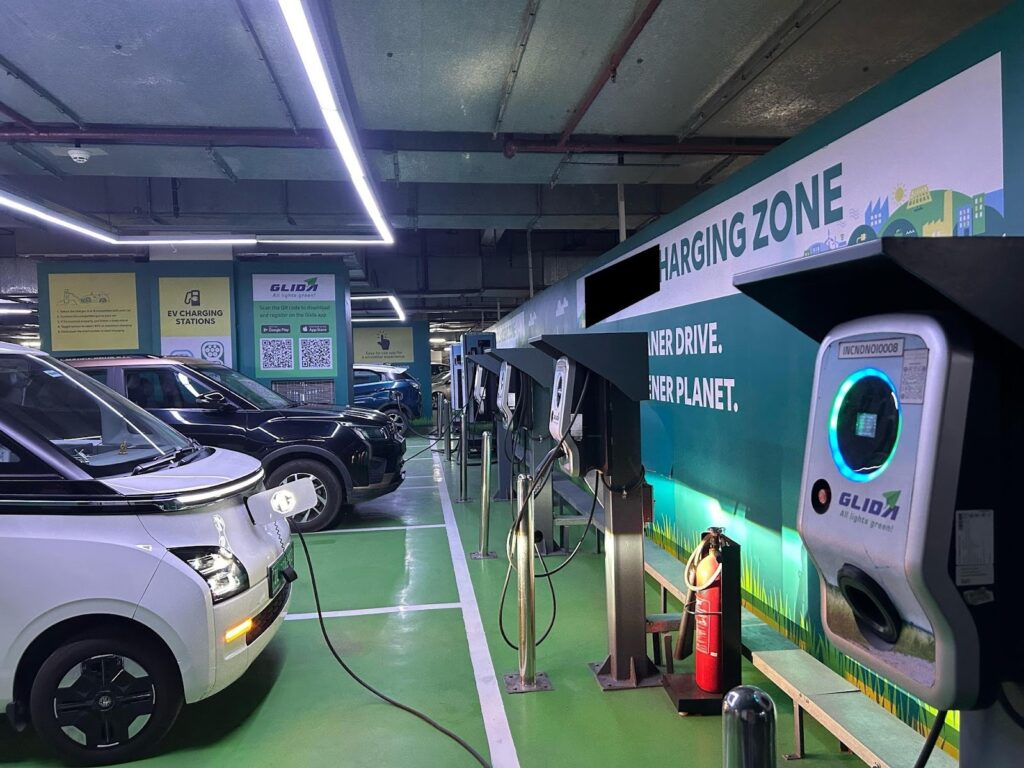
Important Note
Charging is considered a value-added service, not guaranteed availability.
✔ Best for: Road trips and travel stays
4️⃣ Metro Stations & Government Parking Areas
Some Indian cities have installed EV chargers at:
- Metro stations
- Municipal parking zones
- Government buildings
Charging Cost
- Often free during pilot phases
- May later shift to paid models
- Limited number of chargers
Reliability
- Availability varies city to city
- Maintenance can be inconsistent
✔ Best for: Last-mile commuters
5️⃣ Auto Dealerships & EV Showrooms
EV dealerships often allow free charging for:
- Their own customers
- During service visits
- Short top-ups
⚠️ Not meant for daily dependency.
✔ Best for: Occasional use
6️⃣ Residential Societies (Indirectly Free)
Some housing societies allow EV owners to charge:
- Using common area electricity
- At no additional cost initially
⚠️ Long-term sustainability is questionable as usage increases.
✔ Best for: Early EV adopters
Cities Where Free EV Charging Is More Common
Free charging availability is higher in:
- Delhi NCR
- Bengaluru
- Mumbai
- Pune
- Hyderabad
- Chennai
- Ahmedabad
Tier-1 cities lead due to higher EV density and corporate participation.
Types of Free EV Chargers You’ll Encounter
🔌 AC Slow Chargers (Most Common)
- Power: 3.3–7.2 kW
- Charging time: 6–10 hours (full)
- Ideal for parking-duration charging
⚡ DC Fast Chargers (Rarely Free)
- Expensive to operate
- Usually paid
- Occasionally free during promotions only
👉 If it’s free, it’s almost always AC charging.
Real Limitations of Free EV Charging (Important)
Based on real owner experience, free charging has challenges:
❌ Limited Availability
- Few chargers
- First-come-first-serve
❌ Slow Charging Speed
- Not suitable for quick top-ups
❌ Time Restrictions
- Parking or access-based limits
❌ Reliability Issues
- Charger downtime
- No real-time status updates
❌ Not Scalable
- As EV numbers grow, “free” becomes unsustainable
Can You Rely Only on Free EV Charging?
Honest Answer: No
Free EV charging should be treated as:
- A bonus, not a primary solution
- A range-anxiety backup
- A convenience during errands
Ideal Charging Mix for Indian EV Owners
- Home charging: 70–80%
- Paid public charging: 15–25%
- Free charging: 5–10%
This balance ensures reliability and peace of mind.
Government Role in Free EV Charging
Government bodies support EV charging through:
- Pilot programs
- Subsidized land use
- Public infrastructure trials
However, long-term strategy focuses on:
- Affordable paid charging
- Standardized pricing
- Private sector participation
👉 Free charging is seen as a temporary adoption catalyst, not a permanent solution.
Is Free EV Charging Actually “Free”? (Cost Reality)
Even when charging is free:
- Electricity cost is absorbed elsewhere
- Often recovered via:
- Parking fees
- Hotel tariffs
- Office rent
- Retail spending
From an economic standpoint, free charging is a marketing cost, not a utility.
Expert Tips for Using Free EV Charging Safely
✔ Always carry your own charging cable
✔ Avoid extension cords
✔ Don’t block chargers after charging is complete
✔ Respect time limits
✔ Never rely on free charging during emergencies
Good etiquette ensures these facilities remain available.
Future of Free EV Charging in India
What’s Likely to Happen
- Free charging will reduce over time
- Paid but affordable charging will expand
- Subscription-based models will grow
- Workplace and residential charging will dominate
Why This Is Good
- Better maintenance
- Predictable availability
- Scalable infrastructure
Read Also: Family EV cars with child safety features
Final Verdict: Free EV Charging in India
Free EV charging stations do exist in India, but they are:
- Limited
- Situational
- Not meant for daily dependence
They are best viewed as supporting infrastructure, not a replacement for home or paid public charging.
For EV owners, the smartest approach is:
- Home charging as the foundation
- Public paid charging as backup
- Free charging as an occasional benefit
As India’s EV ecosystem matures, convenience will matter more than “free”—and the transition is already underway.
[…] Read Also:Free EV Charging Stations in India: Where & How to Use Them […]
[…] Read Also:Free EV Charging Stations in India: Where & How to Use Them […]