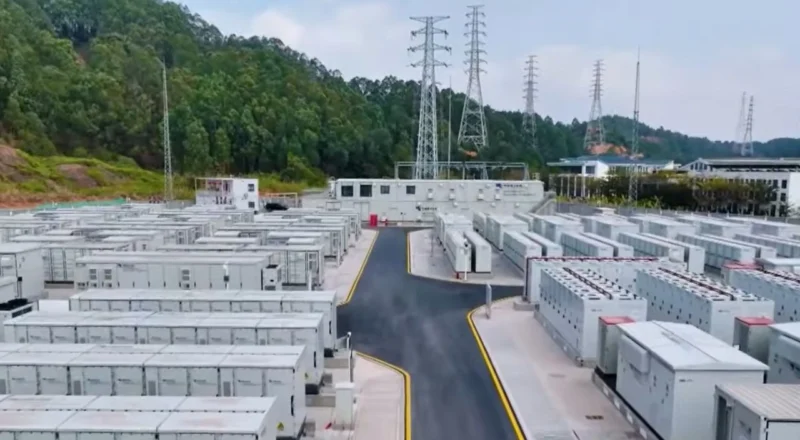
China has launched the world’s largest AI-powered battery storage cluster, redefining grid stability, renewable integration, and energy intelligence.
A Historic Leap in Energy Storage
China has once again reshaped the global clean-energy landscape with the commissioning of the world’s largest AI-powered battery storage cluster. With a total storage capacity measured in tens of gigawatt-hours, this massive deployment marks a decisive shift from traditional grid balancing toward intelligent, software-driven energy systems.
Unlike conventional battery projects that simply store and discharge electricity, this cluster operates as a coordinated, AI-managed ecosystem. Every battery unit communicates in real time, learning from grid conditions, renewable generation patterns, and demand fluctuations. The result is a storage system that doesn’t just respond to the grid—it actively optimizes it.
This milestone places China firmly at the center of next-generation energy storage, offering a blueprint for countries grappling with renewable intermittency, grid congestion, and rising electricity demand.
Understanding the Scale: Why This Project Matters
Battery storage has become a cornerstone of the global energy transition, but scale has always been the limiting factor. What makes this project exceptional is not just its size, but how that size is intelligently managed.
The cluster includes multiple large battery facilities spread across northern China, collectively forming a unified energy asset. At its heart is a single-site installation with a storage capacity that surpasses any other electrochemical battery station currently in operation worldwide.
This scale enables the system to:
- Absorb surplus solar and wind power during peak generation
- Release stored energy during demand spikes or grid stress
- Provide frequency regulation and voltage support at unprecedented levels
In practical terms, this means fewer blackouts, lower curtailment of renewables, and smoother power delivery for millions of consumers.
Read Also:Free EV Charging Stations in India: Where & How to Use Them
AI at the Core of Grid Intelligence
What truly sets this project apart is its deep integration of artificial intelligence.
Traditional battery storage systems operate on fixed rules or basic algorithms. In contrast, this AI-powered cluster uses advanced machine learning models that continuously analyze:
- Weather forecasts
- Renewable generation trends
- Grid frequency and voltage data
- Historical demand patterns
Based on these inputs, the system autonomously decides when to charge, when to discharge, and how much capacity to reserve for emergencies. Over time, it improves its decisions, becoming more accurate and efficient with every cycle.
This approach transforms energy storage from a passive infrastructure asset into an active grid operator, capable of making split-second decisions that once required human intervention.
Supporting China’s Renewable Energy Ambitions
China leads the world in installed solar and wind capacity, but integrating that renewable power reliably into the grid remains a challenge. Wind and solar are inherently variable, and without sufficient storage, excess generation often goes to waste.
This AI-powered battery storage cluster directly addresses that issue by acting as a buffer between renewable generation and electricity consumption. During periods of high wind or solar output, excess energy is stored instead of curtailed. When generation drops, the stored power fills the gap.
The result is:
- Higher utilization of renewable energy assets
- Reduced reliance on coal-based peaker plants
- Lower carbon emissions across the power sector
By stabilizing renewable output at scale, the project accelerates China’s progress toward its long-term decarbonization goals.
Industrial Integration: More Than Just Batteries
Another defining feature of this project is the creation of a localized, end-to-end energy storage ecosystem. Rather than relying on fragmented supply chains, the developers established an integrated industrial base covering:
- Battery cell manufacturing
- System integration and testing
- Project construction and delivery
- Intelligent operations and maintenance
This vertical integration reduces costs, improves quality control, and shortens deployment timelines. It also strengthens regional economic development by creating skilled jobs in advanced manufacturing, AI, and energy engineering.
The project demonstrates how large-scale clean energy infrastructure can drive industrial modernization, not just environmental benefits.
Grid Reliability in a High-Demand Era
As electrification accelerates—driven by electric vehicles, data centers, and industrial automation—power grids are facing unprecedented strain. Peak demand events are becoming more frequent, and traditional infrastructure struggles to keep pace.
The AI-powered battery storage cluster provides a powerful solution. By responding instantly to demand surges, it prevents grid overloads and reduces the need for expensive, carbon-intensive backup power plants.
For grid operators, this means:
- Faster response times to disturbances
- Improved system resilience during extreme weather
- Lower operational costs over the long term
In effect, the cluster acts as a digital shock absorber for the power grid.
Read Also:Best Family EV Cars for Parents With Small Children (2026 Guide)
Global Implications for Energy Storage
The commissioning of the world’s largest AI-powered battery storage cluster sends a clear signal to the global energy industry: the future of storage is intelligent and large-scale.
Countries planning renewable expansion can draw several lessons from this project:
- Scale matters – Small, fragmented storage assets cannot deliver the same grid benefits as coordinated clusters.
- AI is essential – As grids grow more complex, human-managed systems alone are no longer sufficient.
- Integration beats isolation – Storage works best when embedded into the broader energy and industrial ecosystem.
This project sets a new benchmark that will likely influence energy policies, investment strategies, and grid modernization efforts worldwide.
Economic and Environmental Payoffs
Beyond technical achievements, the economic and environmental impacts are substantial.
From an economic standpoint, intelligent battery storage reduces:
- Fuel costs associated with thermal peaker plants
- Grid upgrade expenses
- Renewable energy curtailment losses
Environmentally, it contributes to:
- Significant reductions in greenhouse gas emissions
- Improved air quality by cutting fossil fuel usage
- More efficient land use compared to building new power plants
These combined benefits strengthen the case for large-scale AI-driven storage as a cost-effective climate solution.
Challenges and the Road Ahead
Despite its success, the project also highlights challenges that must be addressed as similar systems are deployed globally.
Key considerations include:
- Ensuring long-term battery safety at massive scales
- Managing lifecycle impacts, including recycling and material sourcing
- Developing regulatory frameworks that support AI-managed grids
China’s experience with this cluster will provide valuable real-world data, helping refine standards and best practices for future projects.
Why This Is a Turning Point for Clean Energy
The launch of the world’s largest AI-powered battery storage cluster is more than a record-breaking achievement—it is a turning point in how energy systems are designed and operated.
By combining massive storage capacity with real-time intelligence, China has demonstrated that renewable-heavy grids can be both stable and efficient. This approach moves the global energy transition beyond experimentation and into the era of industrial-scale implementation.
As other nations race to decarbonize while maintaining energy security, this project stands as a powerful example of what’s possible when advanced technology, strategic planning, and long-term vision align.
Final Thoughts
The future of clean energy will not be built on generation alone—it will be defined by how intelligently that energy is stored, managed, and delivered. China’s AI-powered battery storage cluster proves that storage is no longer just a backup solution; it is the brain of the modern grid.
As the world watches this project perform at scale, one thing is clear: intelligent energy storage has moved from concept to reality, and it is set to play a central role in shaping the global power systems of tomorrow.
[…] Read Also: World’s Largest AI-Powered Battery Storage Cluster in China | Energy Storage Breakthrough […]
[…] Read Also: World’s Largest AI-Powered Battery Storage Cluster in China | Energy Storage Breakthrough […]