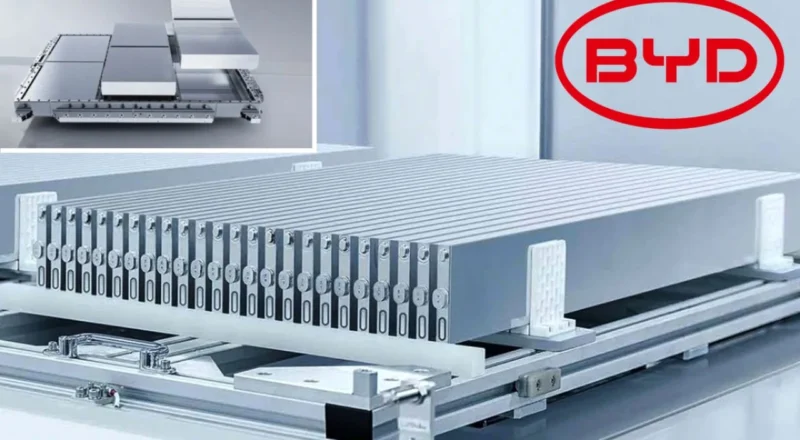
BYD 5-Minute EV Charging Battery: Electric vehicles are rapidly reshaping the global transportation landscape, but one challenge has consistently slowed their widespread adoption—charging time. While electric cars offer impressive efficiency, lower emissions, and reduced running costs, many drivers still worry about the time it takes to recharge their vehicles. This concern, often referred to as “range anxiety,” has been a significant barrier preventing some consumers from switching from traditional fuel-powered vehicles to electric ones.
However, a major breakthrough may soon transform the EV industry. Chinese electric vehicle giant BYD has introduced a revolutionary battery and charging technology that can recharge an electric vehicle in just five minutes. This innovation promises to bring EV charging speeds closer to the convenience of refueling a gasoline vehicle, potentially removing one of the biggest obstacles to mass EV adoption.
The new battery technology represents a significant leap forward in electric vehicle engineering. With ultra-fast charging capabilities, improved safety, and advanced energy management systems, BYD’s latest innovation could redefine how electric vehicles are powered and used around the world. As governments and automakers accelerate the shift toward clean transportation, technologies like this could play a crucial role in shaping the future of mobility.
The Evolution of Electric Vehicle Charging Technology
To understand the importance of BYD’s breakthrough, it is helpful to look at how electric vehicle charging technology has evolved over the past decade.
When modern electric vehicles first entered the market, charging times were extremely long compared with traditional fueling methods. Early EV models often required several hours to fully recharge their batteries, especially when using standard home charging outlets. While this was manageable for overnight charging, it posed significant challenges for long-distance travel.
As EV adoption grew, manufacturers and infrastructure providers began developing faster charging solutions. Direct current (DC) fast chargers were introduced to reduce charging times, allowing drivers to recharge their batteries more quickly during road trips. Many of today’s fast-charging stations can deliver enough power to charge an EV to about 80 percent capacity in roughly 30 to 40 minutes.
Although this represented a major improvement over earlier systems, the charging time still remained longer than refueling a gasoline vehicle. Drivers accustomed to spending only a few minutes at a petrol station often found the waiting time inconvenient.
The industry has therefore been searching for technologies that can significantly reduce charging times without damaging battery health or compromising safety. BYD’s new five-minute charging battery may be the breakthrough that finally bridges this gap.
Read Also: Indonesia nickel industry Faces a Turning Point in the Global EV Battery Race
Understanding BYD’s Ultra-Fast Charging Battery
BYD’s latest innovation is built around an advanced version of its well-known Blade Battery technology. The Blade Battery was originally introduced several years ago and quickly gained attention for its safety, durability, and efficient design.
The newly developed system combines improvements in battery chemistry, internal structure, and energy management to allow extremely rapid energy transfer during charging. By integrating these enhancements with a powerful charging infrastructure, BYD has created a system capable of delivering remarkable charging speeds.
In practical terms, the new technology allows an electric vehicle to recharge from a low battery level to a substantial driving range in just a few minutes. Under optimal conditions, the battery can reach a significant percentage of its capacity within approximately five minutes.
This means drivers could potentially gain hundreds of kilometers of driving range in roughly the same amount of time it takes to buy coffee at a service station.
Such rapid charging could fundamentally transform how drivers perceive electric vehicles. Instead of planning long charging stops during road trips, drivers could recharge quickly and continue their journeys with minimal delays.
The Role of Megawatt-Level Charging Power
One of the key factors behind this breakthrough is the use of extremely high charging power levels. Traditional EV charging stations typically deliver between 50 kilowatts and 350 kilowatts of power. While these chargers are already considered fast, they are not capable of delivering the ultra-rapid charging speeds required for five-minute recharging.
BYD’s new system dramatically increases the amount of power delivered during charging, reaching megawatt-level charging capacity. This means the charging station can supply around 1,000 kilowatts or more of electricity to the vehicle’s battery.
Such immense power enables the battery to absorb energy much faster than conventional systems. However, delivering this level of power safely requires sophisticated engineering solutions.
BYD’s system includes advanced thermal management technology designed to control heat generation during rapid charging. Heat is one of the primary factors that can damage batteries, so maintaining safe operating temperatures is critical.
The system also uses specialized charging connectors and liquid-cooled cables capable of handling extremely high electrical loads. Intelligent charging algorithms monitor the battery’s condition in real time, ensuring that energy is delivered efficiently without causing damage.
These combined innovations make it possible to achieve ultra-fast charging speeds while preserving battery longevity.
The Blade Battery Foundation
The new ultra-fast charging technology builds upon the success of BYD’s Blade Battery design, which has already become one of the most widely discussed battery technologies in the EV industry.
The Blade Battery uses lithium iron phosphate (LFP) chemistry. Compared with other lithium-ion battery types, LFP batteries offer several advantages. They are generally more stable, less prone to overheating, and capable of withstanding a large number of charging cycles without significant degradation.
One of the reasons the Blade Battery gained global attention was its exceptional safety performance. In safety demonstrations, the battery was subjected to severe stress tests, including nail penetration experiments designed to simulate internal short circuits.
Unlike some traditional lithium-ion batteries that may catch fire under such conditions, the Blade Battery remained stable and did not experience thermal runaway.
This reputation for safety has helped BYD gain trust among consumers and industry partners. By building the new ultra-fast charging system on this reliable battery foundation, the company aims to ensure that speed does not come at the expense of safety.
Expanding Charging Infrastructure
Even the most advanced battery technology cannot succeed without adequate charging infrastructure. Recognizing this, BYD is investing heavily in building a network of high-power charging stations capable of supporting its new system.
The company plans to deploy thousands of ultra-fast charging stations designed specifically for its megawatt-level charging technology. These stations are expected to appear first in major cities and along important highway routes.
Each station will be equipped with advanced power management systems capable of delivering extremely high charging speeds. Some stations may also include integrated energy storage systems that help balance the power demand on local electrical grids.
By expanding the charging network, BYD hopes to ensure that drivers can easily access ultra-fast charging when needed. A widespread network of high-power chargers could dramatically improve the practicality of electric vehicles for long-distance travel.
Competing Technologies in the EV Industry
BYD is not the only company working to improve EV charging speeds. Several automakers and technology firms are investing in next-generation charging systems and battery technologies.
Tesla, one of the most well-known electric vehicle manufacturers, operates a global network of Supercharger stations that provide high-speed charging for its vehicles. Other automakers are collaborating with charging network providers to expand ultra-fast charging infrastructure.
However, BYD’s megawatt-level charging system represents a significant leap beyond many currently available solutions.
If the technology proves successful and scalable, it could push other manufacturers to accelerate their own research efforts. Competition among automakers may lead to rapid improvements in battery performance and charging speeds across the entire industry.
Challenges to Widespread Adoption
Despite the impressive capabilities of BYD’s new battery technology, several challenges must be addressed before five-minute EV charging becomes commonplace.
One of the main challenges is the enormous power demand required by megawatt-level charging stations. Delivering such high power levels may require upgrades to local electrical grids and new energy management strategies.
Another challenge is cost. Building high-power charging infrastructure and manufacturing advanced battery systems can be expensive. Automakers and infrastructure providers must find ways to reduce costs while maintaining performance and safety.
Battery durability is also an important consideration. Although the technology has been engineered to handle rapid charging, long-term testing will be necessary to ensure that batteries maintain their performance over many years of use.
Why Faster Charging Matters for EV Adoption
Charging speed is one of the most important factors influencing consumer acceptance of electric vehicles.
Many potential EV buyers worry about being stranded with a low battery during long journeys. Faster charging can help alleviate these concerns by making it easier to recharge quickly.
Ultra-fast charging could also reduce the need for extremely large battery packs. If vehicles can recharge quickly during short stops, manufacturers may be able to design lighter and more affordable EVs.
This could help reduce vehicle costs and improve energy efficiency, making electric cars more accessible to a wider range of consumers.
For commercial applications such as delivery fleets, taxis, and ride-hailing services, faster charging could dramatically improve operational efficiency.
BYD’s Growing Global Presence
BYD has emerged as one of the most influential companies in the global electric vehicle market. Originally founded as a battery manufacturer, the company has expanded into a major automotive producer.
Today, BYD manufactures a wide range of electric vehicles, including passenger cars, buses, trucks, and commercial vehicles. Its models are sold in numerous countries across Asia, Europe, and other regions.
The company has gained recognition for its ability to combine advanced battery technology with competitive pricing. This strategy has helped BYD become one of the world’s leading EV manufacturers.
Innovations like the five-minute charging battery further strengthen the company’s position in the rapidly evolving electric vehicle industry.
Read Also: Best EVs Under ₹15 Lakh in India (2026 Buyer Guide)
The Future of EV Charging
The introduction of ultra-fast charging technology represents an important step toward the next generation of electric mobility.
Researchers around the world are continuing to explore new battery chemistries, including solid-state batteries that could offer even greater energy density and faster charging capabilities.
Future EV charging systems may also incorporate renewable energy sources, smart grid integration, and wireless charging technologies embedded in roads or parking areas.
As these technologies develop, the experience of owning and operating an electric vehicle will continue to improve.
Conclusion
BYD’s introduction of a five-minute EV charging battery represents a remarkable advancement in electric vehicle technology. By combining advanced battery chemistry with megawatt-level charging infrastructure, the company has demonstrated that ultra-fast charging is no longer just a theoretical concept.
If successfully deployed on a large scale, this innovation could significantly reduce charging times and eliminate one of the biggest barriers to EV adoption.
While challenges remain in terms of infrastructure, cost, and long-term battery durability, the potential benefits are enormous. Faster charging could make electric vehicles more convenient, practical, and accessible for millions of drivers worldwide.
As the global transition toward clean transportation accelerates, breakthroughs like BYD’s ultra-fast charging battery may help bring the world closer to a future where electric vehicles dominate the roads.
[…] Read Also: BYD 5-Minute EV Charging Battery: The Future of Ultra-Fast Electric Vehicle Charging […]