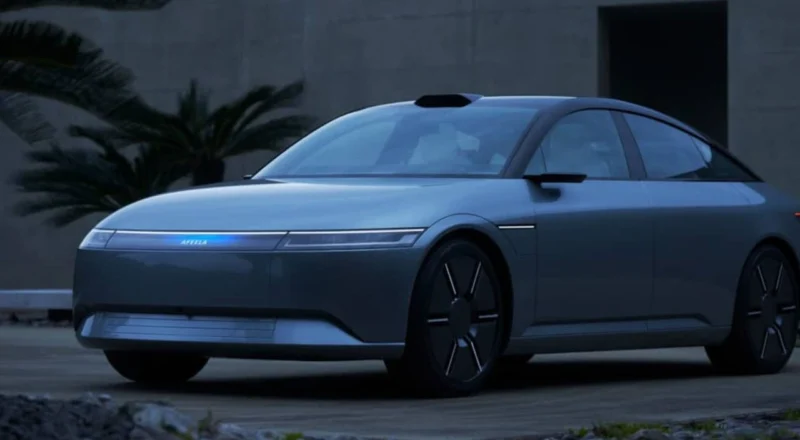
A bold collaboration between tech and automotive giants pauses as shifting EV demand, costs, and strategy reshape future mobility plans.
The global electric vehicle (EV) industry has just witnessed a significant development: Honda and Sony have halted the production and development of their highly anticipated Afeela electric vehicle project. What once symbolized the future of tech-driven mobility and next-generation electric cars has now become a case study in how rapidly changing market conditions can alter even the most ambitious plans.
This decision, made by the joint venture Sony Honda Mobility, reflects a broader shift in the EV landscape—one marked by economic pressures, evolving consumer demand, and strategic recalibration by major automakers. In this detailed article, we explore the reasons behind the halt, its implications for the EV industry, and what it means for future innovation.
The Rise and Vision of the Afeela EV Project
The Afeela project was introduced as a groundbreaking collaboration between Sony, a global leader in electronics and entertainment, and Honda, one of the most respected automotive manufacturers in the world.
The goal was clear: to create a next-generation electric vehicle that seamlessly integrates advanced software, AI, and entertainment with reliable automotive engineering.
Key Objectives of the Afeela Project
- Develop a premium electric sedan with cutting-edge features
- Integrate Sony’s AI, sensors, and entertainment ecosystem
- Leverage Honda’s manufacturing expertise and safety systems
- Offer autonomous driving capabilities and smart connectivity
The Afeela EV was expected to redefine the driving experience by transforming vehicles into digital platforms on wheels, combining mobility with immersive technology.
Why Honda and Sony Halted the Afeela EV
The decision to halt the Afeela EV project did not happen overnight. Instead, it is the result of multiple strategic, financial, and market-driven factors.
1. Honda’s Strategic Shift in EV Investments
One of the most significant reasons behind the halt is Honda’s decision to scale back its aggressive EV investment plans.
Honda reportedly announced a major financial reassessment, including:
- Reduction in EV-related capital expenditure
- Reallocation of resources to hybrid and alternative technologies
- Focus on profitability over rapid expansion
This shift directly impacted the Afeela project, as it relied heavily on Honda’s engineering capabilities and financial backing.
Read Also: Hyundai IONIQ 6 India Launch 2026: A Futuristic Electric Sedan Set to Redefine Premium EV Mobility
2. Rising Costs and Financial Pressures
Developing a premium electric vehicle with advanced technology requires massive investment.
The Afeela EV faced challenges such as:
- High R&D costs for autonomous and AI systems
- Expensive battery development and sourcing
- Infrastructure and production setup costs
With global economic uncertainties and tightening budgets, continuing the project became increasingly difficult.
3. Slowing Global EV Demand
While EV adoption continues to grow, the pace has slowed in several key markets.
Factors contributing to this slowdown include:
- Reduced government subsidies in some countries
- High upfront cost of EVs
- Charging infrastructure limitations
- Consumer hesitation due to range anxiety
This shift forced companies like Honda to re-evaluate their EV strategies and timelines.
4. Loss of Synergy Between Tech and Automotive Goals
The Afeela project depended on a perfect synergy between Sony’s technology and Honda’s automotive expertise.
However, as priorities changed:
- Honda focused more on core automotive strategies
- Sony’s role became more complex without strong manufacturing backing
This misalignment made it difficult to continue the project efficiently.
What Was the Afeela EV Expected to Offer?
Before its cancellation, the Afeela EV generated significant excitement worldwide due to its futuristic features and innovation-driven approach.
Expected Specifications Overview
| Feature | Expected Details |
| Vehicle Type | Premium Electric Sedan |
| Powertrain | Dual Motor AWD |
| Range | ~480 km |
| Technology | AI-driven systems, autonomous features |
| Launch Timeline | Expected around 2026 |
Key Features That Made Afeela Unique
- Advanced sensor suite with 40+ sensors
- AI-powered driver assistance systems
- Integration with Sony’s entertainment ecosystem
- High-resolution displays and immersive cabin experience
- Continuous software updates
The Afeela EV aimed to deliver a completely new driving experience, blending mobility with digital innovation.
Impact on Customers and Pre-Bookings
The halt of the Afeela project has directly impacted early adopters and enthusiasts.
What Happens to Pre-Bookings?
- Customers who pre-booked the Afeela EV will receive full refunds
- No alternative model has been announced yet
- Future updates from Sony Honda Mobility remain uncertain
While this may disappoint early buyers, the refund policy ensures financial transparency and customer trust.
What This Means for the Global EV Industry
The cancellation of the Afeela EV is not an isolated event—it reflects a larger trend in the global automotive industry.
Key Industry Implications
1. EV Market Entering a Realignment Phase
Automakers are shifting from aggressive expansion to sustainable growth strategies.
2. Focus on Profitability
Companies are prioritizing financial stability over rapid EV rollout.
3. Increased Competition
The EV market is becoming highly competitive, with established players and new entrants.
4. Tech-Automotive Partnerships Under Pressure
Collaborations between tech companies and automakers face execution challenges.
Comparison: Afeela vs Other EV Competitors
To understand its position, let’s compare Afeela with other EVs in the market.
EV Comparison Table
| Model | Range | Segment | Key Strength |
| Afeela EV | ~480 km | Premium Sedan | Tech Integration |
| Tesla Model 3 | ~550 km | Premium Sedan | Brand & Performance |
| Hyundai IONIQ 6 | ~600 km | Premium Sedan | Efficiency |
| BMW i4 | ~590 km | Luxury Sedan | Driving Dynamics |
Even though Afeela had strong potential, competitors already had market presence and established ecosystems.
Lessons Learned from the Afeela Project
The halt of the Afeela EV provides valuable lessons for the industry.
Key Takeaways
- Innovation alone is not enough—execution matters
- Market timing is critical for EV success
- Strong financial planning is essential
- Partnerships must align in long-term vision
This case highlights how even well-planned projects can face challenges in a dynamic and evolving market.
The Future of Sony Honda Mobility
Despite the setback, Sony Honda Mobility is not necessarily out of the EV race.
Possible Future Directions
- Reworking the Afeela concept with a revised strategy
- Focusing on software and mobility solutions
- Exploring partnerships with other manufacturers
- Delaying rather than completely abandoning EV plans
The company still holds significant technological expertise, which could be leveraged in future projects.
Broader Trend: Big Tech’s Struggle in the Auto Industry
The Afeela halt is part of a larger pattern where tech companies face challenges entering the automotive sector.
Examples
- Apple reportedly canceled its EV project
- Several startups struggled with funding and scalability
- Traditional automakers remain dominant due to manufacturing expertise
This shows that building a car is far more complex than developing consumer electronics.
What Indian Buyers Should Understand
For Indian consumers, this news carries important insights.
Key Takeaways for Buyers
- EV projects can change based on global strategies
- Established brands may offer more reliability
- Waiting for confirmed launches is often safer
- Market conditions can influence availability
This highlights the importance of informed decision-making when considering EV purchases.
Read Also: Delhi May Expand EV Tax Benefits: A New Policy Push to Accelerate Electric Vehicle Adoption
Is the EV Market Slowing Down?
The EV market is not declining—but it is evolving.
Current Trends
- Growth continues but at a more realistic pace
- Focus shifting toward affordability and infrastructure
- Governments reassessing subsidy policies
- Consumers becoming more selective
This indicates a transition from hype-driven growth to sustainable expansion.
Convlusion: A Strategic Pause, Not the End
The halt of the Afeela EV project marks a significant moment in the evolution of the electric vehicle industry. It reflects the reality that even the most innovative ideas must align with market demand, financial viability, and strategic priorities.
While disappointing, this move is not a failure—it is a strategic pause that allows companies to reassess and adapt.
The future of EVs remains bright, but it will be shaped by careful planning, collaboration, and realistic expectations.
As the industry continues to evolve, one thing is clear: the journey toward electric mobility is not linear, but it is unstoppable.
[…] Read Also: Big EV News: Honda-Sony Afeela Project Halted […]
[…] Read Also: Big EV News: Honda-Sony Afeela Project Halted […]
[…] Read Also: Big EV News: Honda-Sony Afeela Project Halted […]