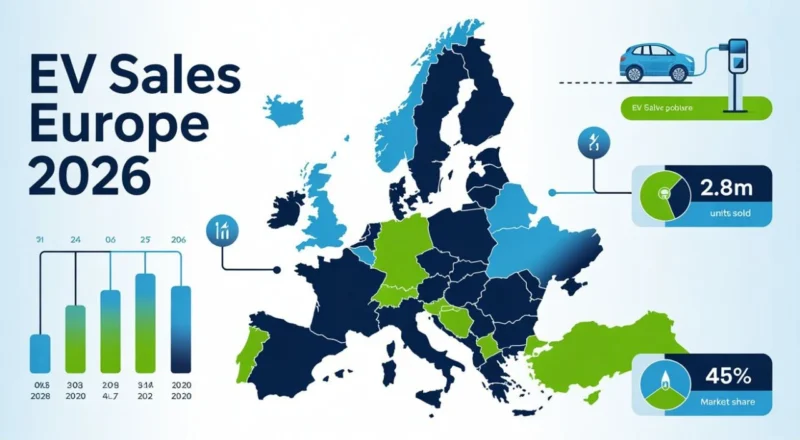
EV sales Europe 2026: The global automotive industry is undergoing a major transformation, and March 2026 has marked a significant milestone in that journey. Across Europe, electric vehicles (EVs) have witnessed an unprecedented surge in demand, setting new sales records. This rapid growth is not just a result of environmental awareness or government incentives—it is being driven strongly by rising petrol prices that are reshaping consumer choices.
As fuel costs climb to uncomfortable levels, more individuals and businesses are turning toward electric mobility as a cost-effective and sustainable alternative. This shift is not limited to Europe alone; it reflects a broader global trend where economic pressures are accelerating the adoption of cleaner transportation.
Record-Breaking EV Sales Across Europe
March 2026 will be remembered as a landmark month for the European electric vehicle market. Sales numbers reached their highest levels ever recorded, showcasing a dramatic shift in consumer behaviour.
Approximately 540,000 electric vehicles were sold across Europe in a single month, representing a remarkable 37% increase compared to the same period last year. This sharp rise highlights how quickly the automotive landscape is evolving when external factors, such as fuel prices, influence buyer decisions.
Consumers who were once hesitant about switching to EVs are now reconsidering their options. The cost of running traditional petrol or diesel vehicles has become significantly higher, making electric alternatives more appealing than ever before.
Read Also: Self-Driving Cars Insurance: Who Pays Insurance After an Accident in the Autonomous Driving Era?
The Fuel Price Factor: A Major Catalyst
One of the biggest driving forces behind this surge in EV adoption is the steep rise in petrol prices. Over the past few months, fuel costs across Europe have increased sharply, placing financial pressure on households and businesses alike.
This price hike is not occurring in isolation. It has been influenced by geopolitical tensions, particularly conflicts affecting major oil supply routes. Disruptions in oil transportation have led to reduced supply in global markets, which in turn has driven prices upward.
When fuel prices rise, consumers naturally begin to look for ways to reduce their expenses. Electric vehicles, which typically have lower running and maintenance costs, become an attractive solution. Charging an EV is often cheaper than filling a petrol tank, especially during periods of high fuel inflation.
Changing Consumer Mindset
The surge in EV sales reflects more than just economic necessity—it signals a shift in consumer mindset. People are becoming more aware of the long-term benefits of electric mobility.
Key reasons influencing buyers include:
- Lower operating costs compared to petrol vehicles
- Reduced dependence on fluctuating fuel prices
- Environmental concerns and sustainability awareness
- Government incentives and subsidies in some regions
For many buyers, the decision to switch to an EV is no longer just about being environmentally friendly. It is now a practical financial choice that offers both short-term savings and long-term value.
Global EV Market Overview
While Europe has emerged as a leader in EV growth during March 2026, the global picture presents a mixed scenario.
Worldwide, approximately 1.7 million electric vehicles were sold, reflecting a modest 3% year-on-year growth. Although this growth may appear small compared to Europe’s performance, it still indicates steady progress in the global transition toward electric mobility.
However, not all regions are experiencing the same momentum.
Strong Growth in Emerging Markets
Beyond Europe, several smaller and emerging markets have shown impressive growth in EV adoption. Countries such as:
- Australia
- New Zealand
- Vietnam
- Thailand
have collectively recorded a 79% increase in electric vehicle sales.
This surge highlights the expanding global interest in EVs, even in regions that were previously considered slow adopters. Factors such as improved infrastructure, government support, and rising fuel costs are contributing to this rapid growth.
Decline in Major Markets: China and North America
Interestingly, while Europe and emerging markets are seeing strong growth, some major economies are experiencing a decline in EV sales.
🇨🇳 China
China, one of the world’s largest EV markets, has reported a 14% drop in sales. This decline is largely attributed to the reduction or removal of government subsidies that previously encouraged EV adoption.
🇺🇸 North America
In North America, EV sales have decreased by 30%, primarily due to changes in tax credit policies. Reduced financial incentives have made electric vehicles less attractive to potential buyers in the region.
These contrasting trends demonstrate how government policies play a crucial role in shaping the EV market. While economic factors like fuel prices can drive demand, supportive policies are equally important in sustaining long-term growth.
Government Response to Rising Fuel Prices
As petrol prices continue to rise, governments across Europe are taking steps to protect consumers. Some countries have introduced fuel price caps or temporary measures to ease the financial burden on citizens.
However, these measures are often short-term solutions. In the long run, many governments are encouraging a transition toward electric mobility as a more sustainable approach.
Policies promoting EV adoption include:
- Subsidies for purchasing electric vehicles
- Investment in charging infrastructure
- Tax benefits for EV owners
- Restrictions on petrol and diesel vehicles in urban areas
These initiatives are helping to accelerate the shift toward cleaner transportation systems.
Economic Benefits of Switching to EVs
One of the strongest arguments in favour of electric vehicles is their economic advantage. Although the initial purchase cost of an EV may be higher than that of a traditional vehicle, the long-term savings can be substantial.
Key financial benefits include:
- Lower fuel costs: Electricity is generally cheaper than petrol
- Reduced maintenance: EVs have fewer moving parts
- Government incentives: Discounts, rebates, and tax benefits
- Higher efficiency: Better energy utilization compared to combustion engines
As petrol prices continue to fluctuate, these advantages become even more significant.
Environmental Impact and Sustainability
Apart from economic factors, environmental concerns remain a major driving force behind the adoption of electric vehicles.
EVs produce zero tailpipe emissions, which helps reduce air pollution and combat climate change. With increasing awareness about environmental issues, more consumers are choosing eco-friendly transportation options.
European countries, in particular, have set ambitious targets to reduce carbon emissions. The growth of EV sales is a crucial step toward achieving these goals.
Challenges Facing the EV Industry
Despite the positive growth, the EV industry still faces several challenges that need to be addressed.
1. Charging Infrastructure
Although charging networks are expanding, some regions still lack adequate infrastructure. This can discourage potential buyers from switching to EVs.
2. Battery Costs
Battery technology is improving, but costs remain relatively high. Reducing battery prices will be essential for making EVs more affordable.
3. Range Anxiety
Some consumers worry about the driving range of electric vehicles and the availability of charging stations during long trips.
4. Policy Dependence
As seen in China and North America, changes in government policies can significantly impact EV sales.
Addressing these challenges will be key to sustaining long-term growth in the EV market.
The Future of Electric Mobility
The record-breaking EV sales in Europe signal a clear direction for the future of transportation. As fuel prices continue to rise and environmental concerns grow, electric vehicles are likely to become the preferred choice for consumers worldwide.
Industry experts believe that:
- EV adoption will accelerate in the coming years
- Technological advancements will improve performance and reduce costs
- Charging infrastructure will expand significantly
- Governments will continue to support clean energy initiatives
The transition to electric mobility is no longer a distant goal—it is happening now.
Read Also: EV Car Insurance Cost 2026: USA vs UK vs India vs Europe Comparison Guide
What This Means for India
The trends observed in Europe offer valuable insights for countries like India, where fuel prices are also a major concern.
As petrol and diesel costs rise in India, consumers may begin to consider electric vehicles more seriously. Government initiatives such as subsidies and the expansion of charging infrastructure are already encouraging this shift.
For Indian buyers, EVs could soon become a practical and economical choice, especially for urban commuting.
Conclusion – EV sales Europe 2026
The surge in electric vehicle sales across Europe in March 2026 highlights the powerful impact of rising petrol prices on consumer behaviour. What started as a response to economic pressure is quickly evolving into a long-term transformation of the automotive industry.
While challenges remain, the overall trajectory is clear—electric vehicles are gaining momentum, and their adoption is being driven by a combination of financial, environmental, and policy factors.
As the world moves toward a more sustainable future, the shift to electric mobility is not just inevitable—it is accelerating faster than ever before.