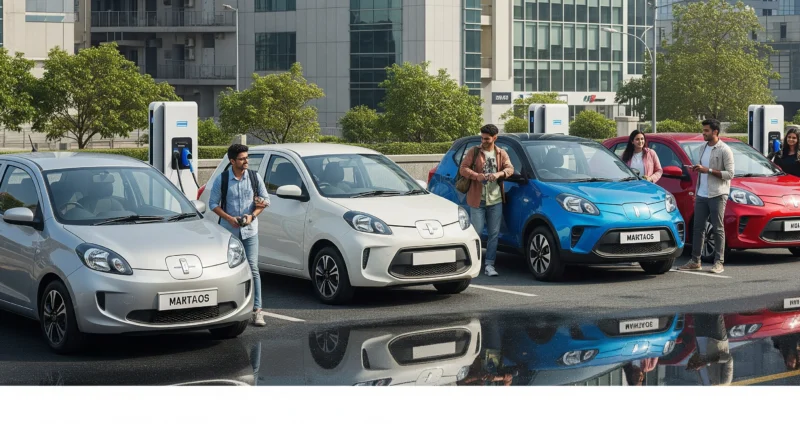
Electric Vehicles (EVs) in India have moved from being niche, expensive products to practical and affordable daily cars. One of the most searched and discussed price brackets today is EVs under ₹15 lakh, because it represents the sweet spot for middle-class families, first-time car buyers, and urban commuters looking to shift from petrol or diesel to electric mobility.
This EEAT-focused guide (Experience, Expertise, Authoritativeness, Trustworthiness) is written to help you make a real-world buying decision, not just compare specs. We’ll cover available models, real ownership costs, charging realities, battery life, pros & cons, and who should actually buy a budget EV in India.
Why EVs Under ₹15 Lakh Matter in India
India is a price-sensitive market, and affordability plays a bigger role than technology hype. EVs under ₹15 lakh matter because:
- They are priced close to petrol/diesel hatchbacks & compact SUVs
- Running cost is 70–80% lower than ICE cars
- Maintenance is simpler with fewer mechanical parts
- Government incentives and GST benefits reduce upfront cost
- Ideal for city driving and daily commuting
For many households, this segment is the entry gate to electric mobility.
EVs Currently Available Under ₹15 Lakh in India
Prices may vary slightly based on state subsidies and variant selection (ex-showroom).
✅ Popular Electric Cars Under ₹15 Lakh
| EV Model | Price Range (₹) | Real-World Range | Best For |
| Tata Tiago EV | 8.5 – 11.9 lakh | 190–240 km | City families |
| Tata Tigor EV | 12.5 – 13.8 lakh | ~260 km | Comfortable sedan buyers |
| MG Comet EV | 7.9 – 9.5 lakh | 180–200 km | Urban solo users |
| Citroën eC3 | 11.6 – 13.9 lakh | 230–260 km | Budget EV hatchback |
| Tata Punch EV (selected variants) | 11 – 15 lakh | 260–290 km | Compact SUV style |
⚠️ Note: These EVs are best suited for urban and semi-urban use, not frequent long highway drives.
Real-World Range vs Claimed Range (Truth Explained)
One of the biggest misconceptions is around EV range.
What You See vs What You Get
- Claimed range: Tested in ideal lab conditions
- Real-world range: Depends on traffic, AC use, driving style, and load
Typical Real-World Performance
- City driving: 85–90% of claimed range
- Highway driving: 65–75% of claimed range
- AC ON + traffic: Slight reduction, but manageable
For most Indian city users driving 30–50 km per day, these EVs easily last 3–5 days on one charge.
Charging Reality for Budget EV Owners
Charging is often misunderstood as a major challenge. In reality, it depends on your use case.
Home Charging (Best Option)
- Standard AC charger (3.3 kW or 7.2 kW)
- Full charge in 6–10 hours
- Cost per unit ≈ domestic electricity tariff
- Safest and cheapest method
Public Charging
- Available in malls, offices, highways, and parking lots
- Slower DC charging compared to premium EVs
- Best used as backup, not daily dependency
💡 Expert Insight:
If you have home parking with a power connection, charging is NOT a problem.
Running Cost Comparison: EV vs Petrol Car
This is where EVs under ₹15 lakh shine.
Approximate Cost Per Km
- Petrol car: ₹6–8/km
- Electric car: ₹1–1.5/km
Monthly Saving (1,000 km/month)
- Petrol: ₹6,000–8,000
- EV: ₹1,200–1,500
Over 5 years, savings can exceed ₹3–4 lakh, even in budget EVs.
Maintenance Cost: EV Advantage Explained
EVs do not have:
- Engine oil
- Gearbox oil
- Clutch
- Exhaust system
What You Pay For:
- Brake pads (less frequent due to regenerative braking)
- Tyres
- Cabin filters
- Software updates (mostly free)
Average annual maintenance for budget EVs is 30–40% lower than petrol cars.
Battery Life & Replacement Cost (Honest View)
Battery fear is the biggest barrier for new buyers.
Battery Warranty
- Most manufacturers offer 8 years / 1,60,000 km
- Covers major degradation and defects
Battery Lifespan
- Typical life: 8–10 years
- Gradual degradation, not sudden failure
Replacement Cost (If Ever Needed)
- Small EV battery: ₹3–4.5 lakh
- Modular packs allow partial repair, not full replacement
👉 In real-world usage, most owners sell the car before battery replacement is needed.
Safety & Build Quality in Budget EVs
Budget EVs are not unsafe, but expectations should be realistic.
What You Get:
- Strong body structure (especially Indian-made EVs)
- Dual airbags (some offer more)
- ABS with EBD
- ISOFIX child seat mounts
- Rear parking sensors & cameras
What You May Not Get:
- Advanced ADAS
- Large touchscreen ecosystems
- Premium interior materials
For city driving, safety levels are adequate and improving with newer updates.
Who Should Buy an EV Under ₹15 Lakh?
✔ YES, Buy If You:
- Drive mostly in the city
- Have home or society charging access
- Want low running & maintenance cost
- Plan to keep the car for 5–8 years
- Prefer smooth, quiet driving
❌ NOT Ideal If You:
- Drive 300+ km daily on highways
- Live in areas with no charging access
- Want high-speed long-distance touring
- Expect premium interiors & features
Ownership Experience: What Real Users Say
From owner feedback across India, common positives include:
- Quiet & stress-free driving
- Very low fuel expense
- Easy city maneuverability
- No engine vibration
Common complaints:
- Limited highway charging confidence
- Slower fast-charging speeds
- Waiting period in some cities
Government Support & EV Policy Impact
EVs benefit from:
- Lower GST compared to petrol cars
- State-level subsidies (varies by region)
- Reduced road tax in some states
These policies make EVs financially competitive, even without fuel savings.
Future Outlook: Is It the Right Time to Buy?
Yes — but with the right expectations.
- Charging infrastructure is improving steadily
- Battery technology is becoming cheaper
- Resale value is stabilizing
- After-sales support is expanding
EVs under ₹15 lakh today are far better than models available just 3–4 years ago.
Final Verdict: EVs Under ₹15 Lakh in India
EVs under ₹15 lakh are practical, economical, and sensible for Indian city users. They are not perfect, but they solve real problems: rising fuel prices, maintenance headaches, and urban pollution.
If your driving is mostly within city limits and you can charge at home, a budget EV can be one of the smartest automotive decisions you make in 2026.
[…] Read Also: Best EVs Under ₹15 Lakh in India (2026 Buyer Guide) […]
Vertyowdiwjodko kofkosfjwgojfsjf oijwfwsfjowehgewjiofwj jewfkwkfdoeguhrfkadwknfew ijedkaoaswnfeugjfkadcajsfn evpost.in
[…] Read Also:Best EVs Under ₹15 Lakh in India (2026 Buyer Guide) […]
[…] Read Also: Best EVs Under ₹15 Lakh in India (2026 Buyer Guide) […]
[…] Read Also: Best EVs Under ₹15 Lakh in India (2026 Buyer Guide) […]