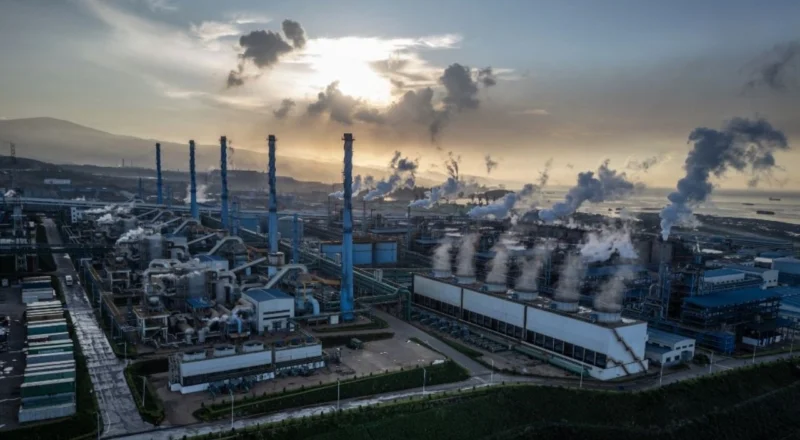
Indonesia nickel industry: Indonesia’s massive nickel reserves fuel electric vehicle ambitions, but changing battery technologies could reshape the country’s strategy.
Indonesia has emerged as one of the most influential players in the global electric vehicle (EV) battery supply chain thanks to its vast nickel reserves. Over the past decade, the country has positioned itself as a critical supplier of raw materials used in lithium-ion batteries, attracting billions of dollars in foreign investment and building a rapidly expanding processing industry.
However, the future of Indonesia’s nickel-driven strategy is now facing uncertainty. As battery technology evolves and automakers explore alternatives to nickel-based chemistries, the country’s long-term role in the EV revolution is being questioned. Industry experts say Indonesia stands at a crossroads: it could either strengthen its position as a global battery powerhouse or face new challenges if demand shifts toward technologies that require less nickel.
Indonesia’s Bold Strategy to Dominate the EV Battery Supply Chain
Indonesia’s rise in the EV battery sector did not happen by accident. The government implemented a bold industrial strategy designed to transform the country from a simple exporter of raw minerals into a global hub for battery manufacturing and electric vehicle production.
Nickel is a crucial ingredient in many high-performance lithium-ion batteries used in electric vehicles. Recognizing the strategic importance of this resource, Indonesia banned the export of raw nickel ore several years ago. The goal was to force mining companies and foreign investors to build processing facilities within the country rather than shipping unprocessed materials overseas.
This policy triggered a wave of investment in smelters, refineries, and battery material plants across Indonesia. Companies from China, South Korea, Japan, and other countries began building large industrial complexes to process nickel into materials used in EV batteries.
By strengthening its domestic processing industry, Indonesia aimed to capture more value from its natural resources and become a central player in the global clean energy transition.
The strategy has already delivered significant results. Indonesia now accounts for a large share of global nickel production and has become one of the most important suppliers of battery-grade nickel materials.
Read Also: 2026 Kia Syros EV Spied in India – Expected Launch, Range, Features & Price
The Critical Role of Nickel in Electric Vehicle Batteries
Nickel has long been considered one of the most important metals for high-energy EV batteries. In many lithium-ion battery chemistries, nickel is used to increase energy density, allowing electric vehicles to travel longer distances on a single charge.
Battery technologies such as nickel-manganese-cobalt (NMC) and nickel-cobalt-aluminum (NCA) rely heavily on nickel. These battery types are widely used in premium electric vehicles because they provide high performance and longer driving ranges.
As global EV adoption accelerated over the past decade, demand for nickel surged dramatically. Automakers and battery manufacturers began searching for reliable sources of the metal to secure their supply chains.
Indonesia’s massive nickel reserves quickly became a strategic advantage. The country holds some of the world’s largest nickel deposits, particularly in regions such as Sulawesi and Halmahera.
This abundance of nickel allowed Indonesia to position itself as a cornerstone of the global EV battery ecosystem.
Investors poured billions of dollars into mining operations, refining facilities, and battery material plants, hoping to capitalize on the growing demand for electric vehicles worldwide.
Rapid Investment Fuels Indonesia’s Battery Ambitions
Indonesia’s government has actively promoted the development of a complete EV battery supply chain within the country.
The vision goes far beyond mining nickel. Officials want Indonesia to produce everything required for EV batteries, including processed nickel, cathode materials, battery cells, and eventually electric vehicles themselves.
To achieve this goal, the government has partnered with major international companies to build large-scale battery manufacturing projects. These initiatives aim to integrate every stage of the supply chain, from mineral extraction to final battery assembly.
Billions of dollars in foreign direct investment have flowed into Indonesia’s nickel and battery industries.
Chinese companies have been among the most active investors, building massive smelting complexes and battery material plants. South Korean and Japanese firms have also announced joint ventures to develop EV battery manufacturing facilities.
These investments are expected to create thousands of jobs, boost exports, and strengthen Indonesia’s role in the global energy transition.
Emerging Battery Technologies Challenge Nickel’s Dominance
Despite Indonesia’s strong position in the nickel market, the global battery industry is undergoing rapid technological change.
One of the most significant developments is the growing popularity of lithium iron phosphate (LFP) batteries. Unlike traditional lithium-ion batteries that rely on nickel and cobalt, LFP batteries use iron and phosphate as key materials.
This alternative chemistry offers several advantages. LFP batteries are generally cheaper to produce because they rely on more abundant materials. They also tend to be safer and more stable, reducing the risk of overheating or fires.
As a result, many automakers have started using LFP batteries in entry-level and mid-range electric vehicles.
The increasing adoption of LFP batteries raises concerns about the future demand for nickel in EV batteries.
If the global market shifts significantly toward nickel-free battery technologies, countries heavily dependent on nickel exports could face economic challenges.
In Indonesia, the trend is already visible. A large proportion of electric vehicles sold domestically now use LFP batteries rather than nickel-based battery chemistries.
Cost Pressures Drive Automakers Toward LFP Batteries
Another reason for the growing popularity of LFP batteries is cost. Reducing the price of electric vehicles is essential for accelerating mass adoption.
Nickel is relatively expensive compared with iron and phosphate. By using LFP batteries, manufacturers can significantly lower production costs and make EVs more affordable for consumers.
Lower costs are particularly important in emerging markets where price sensitivity remains high.
Many Chinese automakers have already embraced LFP technology as part of their strategy to produce affordable electric vehicles. As these companies expand globally, they are bringing their battery preferences with them.
This shift could reshape global demand for battery materials and potentially reduce the importance of nickel in certain segments of the EV market.
Environmental Concerns Surround Indonesia’s Nickel Boom
While Indonesia’s nickel industry has driven economic growth, it has also raised environmental concerns.
Large-scale mining operations can lead to deforestation, habitat destruction, and water pollution if not properly managed. In some areas, rapid industrial development has placed pressure on local ecosystems.
Another concern is the energy used in nickel processing. Many smelters in Indonesia rely on coal-powered electricity, which produces significant carbon emissions.
This creates a paradox for the EV industry. Electric vehicles are intended to reduce greenhouse gas emissions, but the production of battery materials can generate substantial environmental impacts.
Environmental groups have called for stronger regulations and cleaner energy sources for nickel processing to ensure that EV supply chains remain truly sustainable.
Addressing these environmental challenges will be critical for Indonesia’s long-term success in the EV battery industry.
Social and Community Impacts of Mining Expansion
Beyond environmental issues, the rapid expansion of nickel mining has also affected local communities.
Mining projects often require large areas of land, which can disrupt traditional livelihoods such as farming and fishing. Some communities have raised concerns about land rights, labor conditions, and the distribution of economic benefits.
While mining has created jobs and infrastructure development in some regions, it has also sparked debates about how to balance economic growth with social and environmental protection.
Ensuring that local communities benefit from the nickel boom will be an important factor in maintaining public support for the industry.
Global Competition for Critical Minerals Intensifies
Indonesia is not the only country seeking to dominate the EV battery supply chain.
Around the world, governments are racing to secure supplies of critical minerals needed for clean energy technologies. The United States, China, and the European Union are investing heavily in battery manufacturing and mineral processing.
These countries are also exploring ways to diversify their supply chains to reduce dependence on any single source.
Despite this competition, Indonesia’s vast nickel reserves remain a powerful advantage. The country continues to play a crucial role in global discussions about critical mineral supply chains.
Control over essential battery materials gives Indonesia significant geopolitical and economic influence in the emerging EV economy.
Adapting to a Changing Battery Market
Industry analysts say Indonesia must adapt its strategy to remain competitive in a rapidly evolving battery market.
One option is to diversify beyond nickel and invest in other battery materials such as lithium, cobalt, or manganese. Another approach is to focus on developing advanced battery technologies that still rely on nickel but use it more efficiently.
Indonesia could also expand its EV ecosystem by investing in battery recycling, research and development, and renewable energy infrastructure.
By strengthening these areas, the country could maintain its leadership position even if battery technologies evolve.
Opportunities for Indonesia in the Global Energy Transition
Despite the challenges, Indonesia’s role in the EV industry remains extremely significant.
Global demand for electric vehicles continues to grow as countries seek to reduce carbon emissions and transition away from fossil fuels. Even if some EV models use alternative battery chemistries, nickel will likely remain an important component in many high-performance batteries.
In addition, Indonesia’s efforts to build an integrated EV supply chain could create new opportunities for manufacturing, innovation, and economic development.
The country has the potential to become one of the world’s most important hubs for EV battery production.
Read Also: Family EV Cars With Child Safety Features 2
The Road Ahead for Indonesia’s Nickel Industry
Indonesia now faces a critical moment in shaping the future of its nickel industry.
The decisions made today will determine whether the country can fully capitalize on its natural resources while adapting to technological changes in the battery sector.
Investing in sustainable mining practices, diversifying the battery supply chain, and supporting innovation will be key to ensuring long-term success.
If managed carefully, Indonesia’s nickel resources could continue to play a major role in powering the global transition to clean energy.
Conclusion: A Crossroads in the Global EV Battery Race
Indonesia’s vast nickel reserves have placed the country at the center of the global electric vehicle revolution. Through strategic policies and massive investments, it has rapidly developed a powerful battery materials industry.
However, evolving battery technologies and environmental challenges mean the path forward is not guaranteed.
The growing adoption of nickel-free battery chemistries such as LFP is forcing policymakers and industry leaders to rethink their long-term strategies.
Indonesia now stands at a crossroads in the EV battery race. With the right investments, policies, and sustainability measures, the country could remain a dominant force in the global EV supply chain for decades to come.
The next chapter of the electric mobility revolution will depend not only on technology but also on how resource-rich nations like Indonesia adapt to the rapidly changing energy landscape.