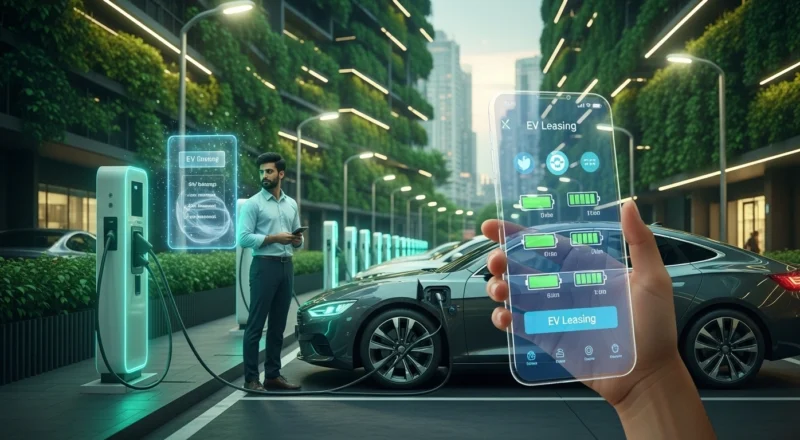
Discover why EV leasing is becoming the smartest way to adopt electric vehicles in India. Learn how leasing reduces costs, manages battery risks, and accelerates EV adoption for individuals and businesses.
The Rise of EV Leasing in India: A New Era of Electric Mobility
Electric vehicles are no longer a futuristic idea in India—they are quickly becoming a practical reality. Over the past few years, the Indian automotive market has witnessed a steady increase in the adoption of electric two-wheelers, cars, and commercial vehicles. Rising fuel prices, environmental concerns, and supportive government policies have created strong momentum for electric mobility. Yet despite this progress, many potential buyers remain hesitant to switch from traditional petrol or diesel vehicles to EVs.
One of the main barriers is the high upfront cost of electric vehicles. While EVs typically cost less to run and maintain over time, the initial purchase price can still discourage many consumers. This is where the concept of EV leasing is gaining attention. Instead of buying a vehicle outright, users can lease an EV by paying a fixed monthly fee for a specific period. This model dramatically lowers the financial barrier to entry and allows users to experience electric mobility without committing to long-term ownership.
EV leasing is particularly attractive in a rapidly evolving technology environment. Electric vehicles are improving quickly, with better batteries, longer ranges, and faster charging capabilities being introduced almost every year. Leasing allows consumers and businesses to upgrade to newer models more easily rather than being stuck with outdated technology. As a result, leasing is increasingly seen as the next big driver of EV adoption in India, helping bridge the gap between curiosity and commitment.
Read Also: Top 5 Upcoming Budget Electric Cars in India 2026 Under ₹6 Lakh – Price, Range & Launch Updates
Why Traditional EV Ownership Still Feels Risky
Although interest in electric vehicles is growing, many Indian consumers remain cautious about purchasing one. The hesitation is not necessarily about the technology itself; instead, it often stems from uncertainty. Buying a vehicle is a major financial decision, and with EV technology evolving rapidly, many people are worried about making the wrong investment.
One of the biggest concerns is battery life and degradation. The battery is the most expensive component of an electric vehicle, and buyers worry about how long it will last. While manufacturers offer warranties that typically range between 6 and 8 years, uncertainty about long-term battery performance still affects purchasing decisions. People often wonder whether the battery will lose capacity over time and whether replacement costs will be too high.
Another issue is resale value. The used EV market in India is still developing, which makes it difficult to estimate how much an electric vehicle will be worth after a few years. Traditional petrol and diesel cars have a well-established resale market, but EVs are relatively new, making depreciation predictions uncertain.
Rapid technological innovation adds another layer of concern. Every year brings improvements in battery efficiency, driving range, and charging speeds. Buyers worry that the EV they purchase today might become outdated within a few years. These uncertainties make leasing an appealing option because it allows users to enjoy electric mobility without carrying the long-term financial risk associated with ownership.
How EV Leasing Works
EV leasing works similarly to renting a vehicle for a fixed duration, but with a structured agreement. Instead of paying the full price of the car, the user pays a monthly fee for the right to use the vehicle for a certain period—usually between two and five years. At the end of the lease term, the vehicle is returned to the leasing company or replaced with a newer model.
The monthly lease payment typically covers several elements, including the cost of the vehicle’s depreciation, financing charges, and sometimes maintenance services. In some cases, leasing packages also include insurance, servicing, and roadside assistance. This makes leasing particularly convenient because users do not have to worry about multiple separate costs.
Leasing is especially popular among businesses and fleet operators. Companies that operate large vehicle fleets, such as logistics firms, ride-sharing services, and corporate mobility providers, prefer leasing because it reduces capital expenditure. Instead of investing large sums to purchase vehicles, businesses can allocate their funds more efficiently while still expanding their electric fleets.
For individual consumers, leasing offers flexibility and peace of mind. Users can drive a modern electric vehicle without worrying about long-term depreciation or resale value. When the lease ends, they can upgrade to a newer EV model that features improved technology, better range, and updated features.
Financial Advantages of Leasing Electric Vehicles
One of the strongest reasons for the rise of EV leasing in India is financial efficiency. Purchasing an electric vehicle often requires a substantial upfront investment, even with financing options. Leasing removes this barrier by converting the cost of the vehicle into predictable monthly payments.
This financial structure benefits both individuals and businesses. For individuals, leasing makes EVs more accessible because it reduces the immediate financial burden. Instead of paying a large down payment or taking a long-term loan, consumers can spread the cost across manageable monthly installments.
Businesses gain even greater advantages through leasing. Many companies prefer converting vehicle purchases from capital expenditure (CapEx) to operational expenditure (OpEx). This approach helps businesses maintain liquidity and invest their capital in other strategic areas such as expansion, innovation, or marketing.
Government incentives further strengthen the financial case for EV leasing in India. Electric vehicles attract significantly lower GST compared to traditional vehicles, and businesses can benefit from accelerated depreciation benefits. These tax advantages can make leasing EVs even more cost-effective for corporate fleets.
Another financial benefit is the lower running cost of electric vehicles. Electricity is generally cheaper than petrol or diesel, and EVs have fewer moving parts, which reduces maintenance expenses. When combined with leasing, these savings make electric mobility increasingly attractive for both businesses and individuals.
Read Also: World’s Largest AI-Powered Battery Storage Cluster in China | Energy Storage Breakthrough
Why Businesses Are Leading EV Leasing Adoption
Corporate fleets and commercial vehicle operators are currently the largest adopters of EV leasing in India. Businesses that rely heavily on transportation—such as delivery services, logistics companies, and ride-hailing platforms—are constantly looking for ways to reduce operating costs and improve efficiency.
Electric vehicles offer significant cost savings in daily operations. The cost per kilometer for EVs is usually much lower than for petrol or diesel vehicles. Over time, these savings can add up to substantial amounts, especially for businesses operating large fleets.
Leasing allows companies to scale their electric fleets without major upfront investments. Instead of purchasing dozens or hundreds of vehicles, businesses can lease them and pay manageable monthly fees. This approach allows companies to expand quickly while maintaining financial flexibility.
Sustainability goals also play an important role. Many corporations are adopting Environmental, Social, and Governance (ESG) commitments that require them to reduce carbon emissions. Electrifying their vehicle fleets is one of the most effective ways to achieve these goals. Leasing provides a convenient pathway for companies to transition to electric mobility while minimizing risk.
Because of these advantages, many industry experts believe that B2B adoption will drive the first major wave of EV leasing growth in India, eventually influencing consumer markets as well.
The Role of Government Policies and Incentives
Government policies have been a key driver of electric vehicle adoption in India. Programs such as the FAME (Faster Adoption and Manufacturing of Electric Vehicles) initiative have played an important role in encouraging EV purchases by providing financial incentives.
In addition to purchase incentives, the government is investing in charging infrastructure development. Expanding charging networks across cities and highways is essential for building consumer confidence in electric mobility. As charging stations become more widespread, concerns about range anxiety will gradually decrease.
Policies supporting local manufacturing of EV components, including batteries, are also shaping the future of the industry. Production-linked incentive (PLI) schemes aim to strengthen domestic manufacturing capabilities and reduce reliance on imports. This could help lower EV prices in the long run, making electric vehicles even more accessible.
Leasing companies benefit from these policy frameworks because they create a more stable and predictable EV ecosystem. As government support continues to expand, leasing providers can offer more competitive plans and attract a larger customer base.
Changing Consumer Mindsets Toward Mobility
India has traditionally been a market where owning a car symbolizes financial success and personal freedom. For decades, buying a vehicle was seen as a major milestone in life. However, this mindset is gradually evolving, especially among younger urban consumers.
Many people today prioritize access over ownership. Subscription services, streaming platforms, and shared mobility solutions have changed how people think about products and services. Instead of owning everything outright, consumers increasingly prefer flexible options that allow them to upgrade or change services easily.
Electric vehicles fit perfectly into this evolving mindset. Because EV technology evolves rapidly, owning a vehicle for a long time may not always be the most practical option. Leasing provides the flexibility to upgrade to newer models with improved performance and features.
Urban professionals who frequently change cities or jobs also appreciate the flexibility leasing offers. Rather than dealing with the complexities of selling a vehicle, they can simply return it at the end of the lease period.
As consumer attitudes continue to shift, leasing could become one of the most popular ways to access personal mobility in India.
Read Also: Mahindra BE 6: A Bold New Chapter in India’s Electric SUV Revolution
The Future of EV Leasing in India
The future of EV leasing in India looks promising. As the electric vehicle ecosystem matures, leasing is likely to become more mainstream. Improvements in charging infrastructure, battery technology, and vehicle affordability will further accelerate this trend.
Automakers and financial institutions are already exploring innovative leasing models tailored to different types of users. Some companies are experimenting with battery-as-a-service models, where the battery is leased separately from the vehicle. This approach reduces the upfront cost of EVs even further and makes ownership or leasing more affordable.
Digital platforms are also making leasing more convenient. Customers can compare leasing options, calculate monthly costs, and complete the entire leasing process online. This convenience is expected to attract younger, tech-savvy consumers who prefer digital experiences.
In the coming years, EV leasing could play a major role in helping India achieve its electric mobility goals. By lowering financial barriers and reducing risk, leasing can bring electric vehicles to a much wider audience.
Conclusion
Electric vehicles are transforming the automotive landscape in India, but the way people access these vehicles is also changing. While traditional ownership remains important, leasing is emerging as a powerful alternative that aligns with modern mobility needs.
By reducing upfront costs, managing technological risks, and offering flexibility, EV leasing in India provides a practical pathway for both individuals and businesses to adopt electric vehicles. It addresses many of the concerns that currently slow EV adoption, including battery life uncertainty, resale value worries, and rapid technological change.
As infrastructure improves, government support continues, and consumer mindsets evolve, leasing could become one of the most influential drivers of electric mobility in the country. Instead of focusing solely on ownership, the future of transportation may revolve around smart access to cleaner, more efficient vehicles.
FAQs
1. What is EV leasing?
EV leasing is a financial arrangement where users pay a monthly fee to use an electric vehicle for a fixed period instead of purchasing it outright.
2. Is leasing an electric car cheaper than buying one?
Leasing usually requires lower upfront costs and predictable monthly payments, which can make it more affordable than purchasing an EV.
3. Who benefits the most from EV leasing?
Businesses, fleet operators, and urban professionals benefit greatly from EV leasing because it reduces capital investment and offers flexibility.
4. What happens at the end of an EV lease?
At the end of the lease period, users typically return the vehicle to the leasing company or upgrade to a newer model.
5. Will EV leasing grow in India?
Yes. With government support, improving charging infrastructure, and evolving consumer preferences, EV leasing is expected to grow rapidly in India.
India’s EV ecosystem is growing rapidly with strong government support. Programs like the India’s FAME electric vehicle scheme aim to accelerate EV adoption by offering subsidies and encouraging infrastructure development. According to the Global EV Outlook report, electric mobility is expanding worldwide, and India is emerging as one of the fastest-growing EV markets. Experts also suggest that leasing models could significantly reduce financial barriers for consumers, as discussed in this Times of India analysis.