Volkswagen has officially unveiled the Volkswagen ID. Tiguan EV for the European market on October 10, 2026. The manufacturer has been introduced as the successor of the Volkswagen ID.4 and the Volkswagen ID. 5. On October 13, 2026, the pre-sale for the European market was 43,694 euros, which translates to 46.30 lakh rupees.
By launching the Volkswagen ID. Tiguan EV, the German automobile manufacturer, has extended the nameplate lineup. The model is now available with a total of four powertrains; they are petrol, engine, petrol-hybrid, and battery-electric. Let’s have a closer look at its all-electric counterpart.
Get pure positive exterior design.
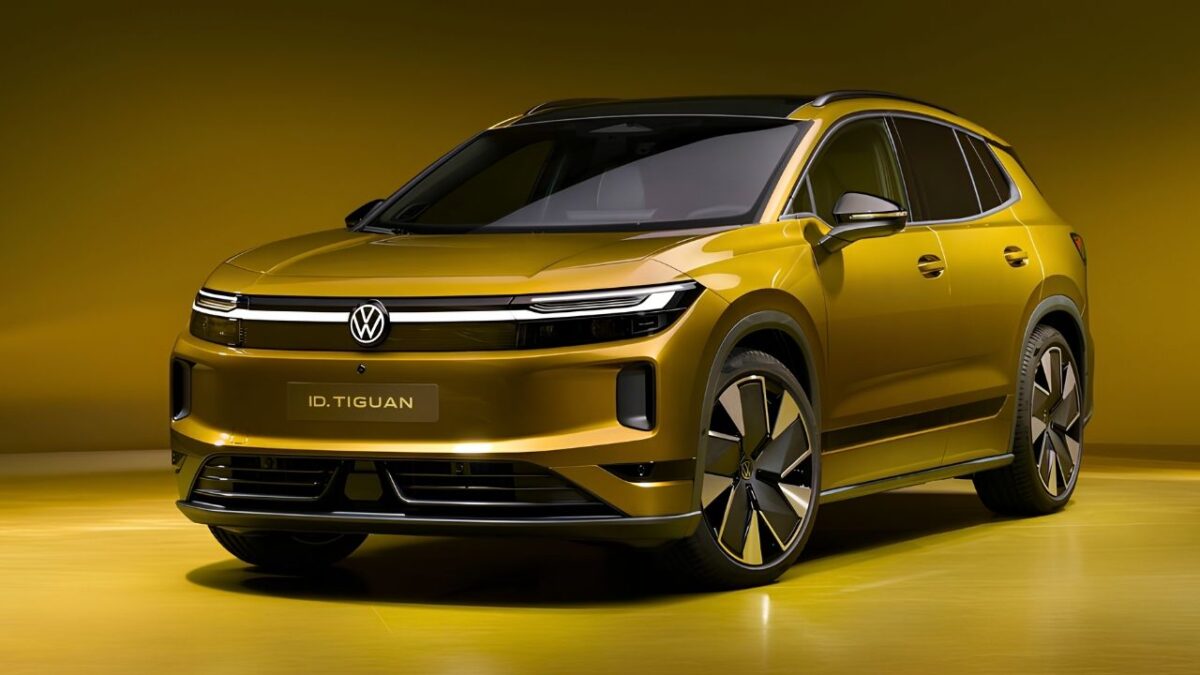
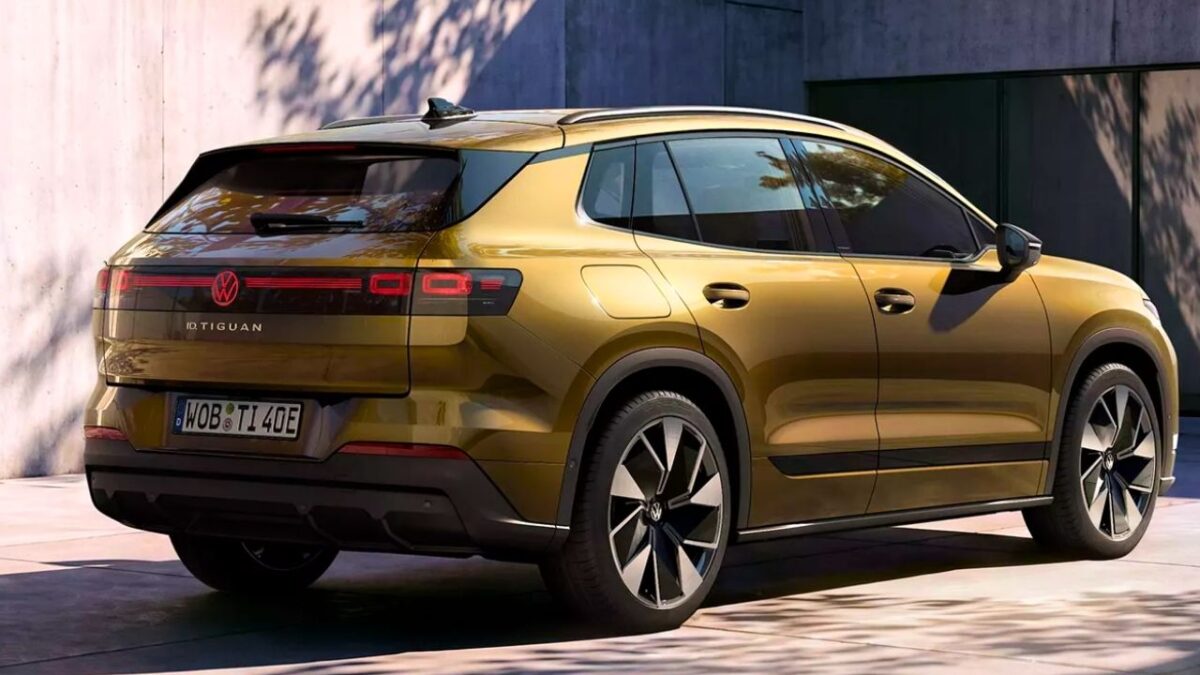
The Volkswagen ID. Tiguan EV comes with the Pure Positive design with the smooth, sculpted surface and sharp lines. Upfront, it has closed-off grille enhance aerodynamics, a prominent front bumper adding SUV characteristics, and a full-width LED daylight running light with the Volkswagen logo at the center.
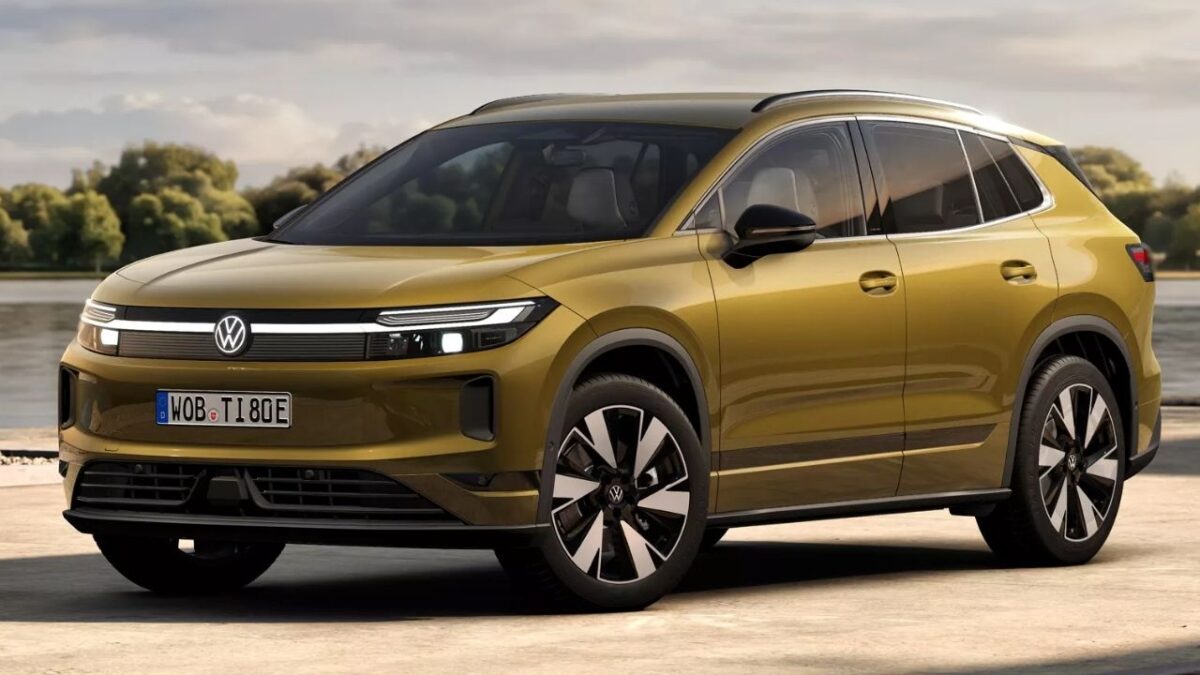
Its side features black roof rails that help in mounting luggage, round wheel arches cladding around the wheels creating a wide stance, and pull-type door handles for enhanced practicality. The rear boat’s roof-integrated spoiler with braking light, full-width LED taillamps with illuminated VW logo, and ID. Tiguan letting off the tailgate.
Features 2.7 metres wheelbase.
The Volkswagen says that the VW ID. Tiguan EV measures 4,618 mm longer, 1,855 mm wider without a mirror, 2,108 mm wider with a mirror, and 1,635 mm taller. The carmaker has also unveiled other dimensions. Its wheelbase is 2,771 mm, and it features 5 seats in a 2-3 layout with a boot space of 533 liters behind the second row.
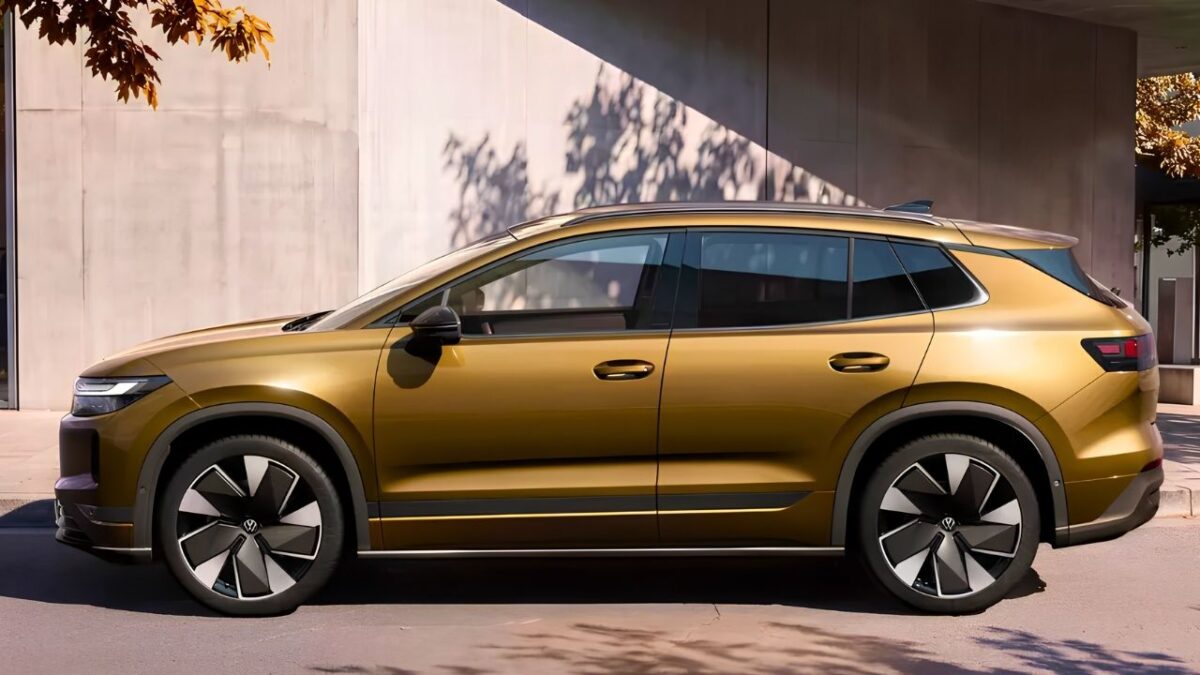
The cargo capacity behind the second row is expandable up to 1,565 liters, as per the manufacturer. This feature helps with carrying big luggage conventionally. Apart from the cargo space, there’s also a 32-liter trunk under the hood. The carmaker also has confirmed a 2,000 kg towing capacity and a 75 kg roof load capacity.
Built on the MEB+ platform.
The VW ID. Tiguan EV is built on the MEB+ platform. Regarding suspension and braking, the company is yet to unveil the details. The German carmaker says that the cabin is equipped with premium and high-tech features to ensure better comfort and convenience for occupants over rivals.
A total of three screens can be seen inside the cabin in the images that the VW has officially released. The company has confirmed that the centrally mounted one is the largest; it measures 15 inches. Its instrument cluster’s size is 10 inches, and the co-passenger display is 12 inches.
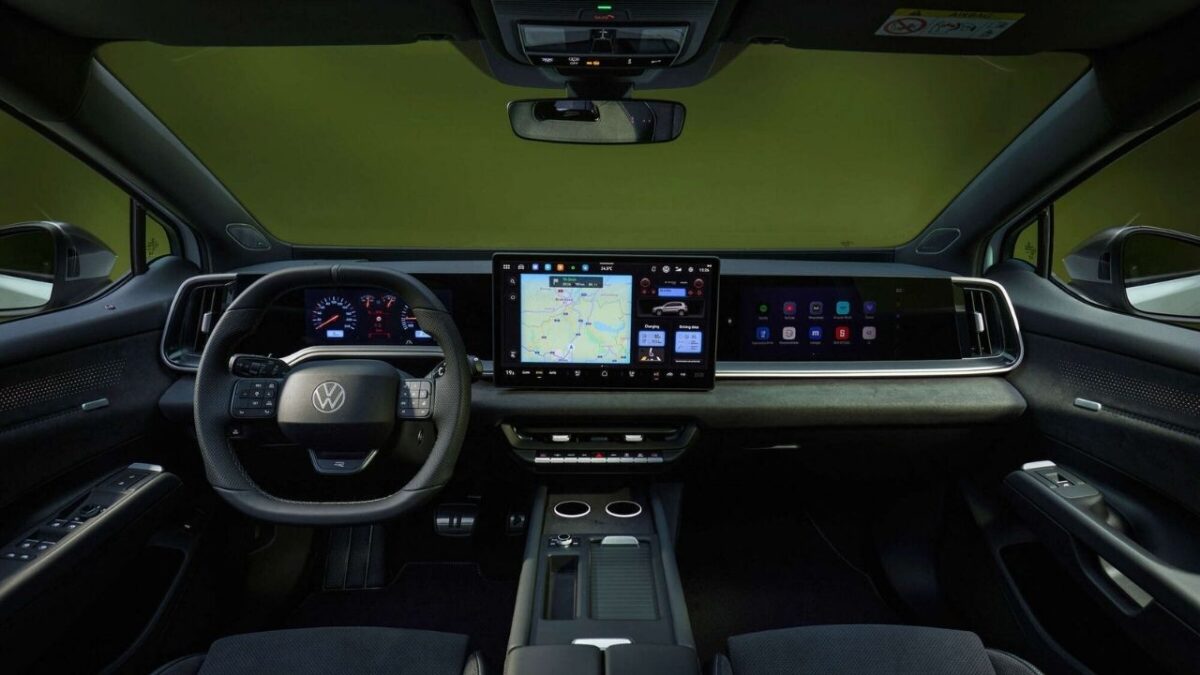
As per the company unveiling, the front seats are powered with the memory function. Even these seats have ventilation and massage functions. To enhance the infotainment experience, a 480-watt Harman Kardon audio system has been introduced that ensures an immersive audio experience.
The wireless phone charging pad at the center console and panoramic sunroof are the features that enhance the cabin’s premiumness. The advanced driving assistant system suite is also offered. This feature may not be available for all the markets, according to various reports.
Three powertrain configurations.
The Volkswagen ID. Tiguan EV is available with two different battery packs: 58 kWh LFP and 77 kWh NMC. The standard one is available with rear-wheel drive and large with the all-wheel-drive drivetrain. The RWD variant gets a permanent magnet synchronous motor on the rear axle, and the AWD also has an induction motor on the front axle.
The rear-wheel-drive version with a 58 kWh LFP and 77 kWh NMC battery pack delivers 190 PS and 286 PS power, but the only all-wheel-drive train that comes with the 77 kWh LFP battery pack puts out 299 PS power. The 0 to 100 km/h acceleration timing, top speed, and WLTP range are:
| Variant | 0–100 km/h | Top speed | WLTP range |
| 58 kWh RWD (190 PS) | 8.5 seconds | 160 km/h | Up to 450 km |
| 77 kWh RWD (286 PS) | 6.6 seconds | 180 km/h | Up to 600 km |
| 77 kWh AWD (299 PS) | 6.3 seconds | 180 km/h | Up to 560 km |
The manufacturer has also confirmed the DC charging out and time. The LFP battery pack supports a DC charger up to 105 kW that takes 26 minutes for 10 to 80 percent charging, and the NMC battery pack supports a DC charger up to 165 kW, which takes 29 minutes for the same 10-80% charging.